Energy Healing
SoulNar Sound Healing Energy Therapy

SoulNar Sound Healing Energy Therapy: A Complete Guide
Some healing experiences are hard to put into words, and SoulNar Sound Healing Energy Therapy is one of them. Part sound bath, part energy work, it's a structured session that uses three specific instruments, crystal singing bowls, 528Hz chime bars, and tingsha bells, alongside hands-on energy healing techniques to bring the body into a state of deep rest and energetic balance.
SoulNar describes itself as the first modality to combine the powerful combination of sound and energy healing into a single, cohesive practice. What makes it distinct isn't just the combination of tools, it's the way they're applied. A certified practitioner works with both the auditory frequencies of the instruments and the body's energy field simultaneously, addressing stress and emotional tension from two angles at once.
It's a fully non-invasive therapy. You remain clothed throughout, lying comfortably while the practitioner moves through a structured protocol designed to shift your energetic state, quiet the nervous system, and leave you feeling genuinely different on the other side, not just relaxed, but lighter.
The Origins of SoulNar
SoulNar was created by Bianca Mayers, an Australian Reiki Master, sound healing therapist, and psychic medium. Bianca descends from a long line of healers and intuitives and has combined her knowledge across multiple healing disciplines to develop SoulNar as a unified modality.
SoulNar is certified through the International Institute for Complementary Therapists (IICT) and is recognised in over 35 countries, including Australia, New Zealand, the United Kingdom, and across Europe.
While SoulNar itself is a contemporary Australian creation, it draws on healing traditions that go back thousands of years. Sound has been used therapeutically across cultures for millennia, from Tibetan monasteries to Indigenous Australian ceremonial practices involving the didgeridoo, to Ayurvedic healing chants in ancient India. The modern era has seen a resurgence in the popularity of sound therapy, attributed in part to a growing body of scientific research that underscores the profound impact sound can have on the human body and mind. SoulNar sits at that intersection of ancient tradition and contemporary therapeutic structure.

How SoulNar Works
The Sound Component
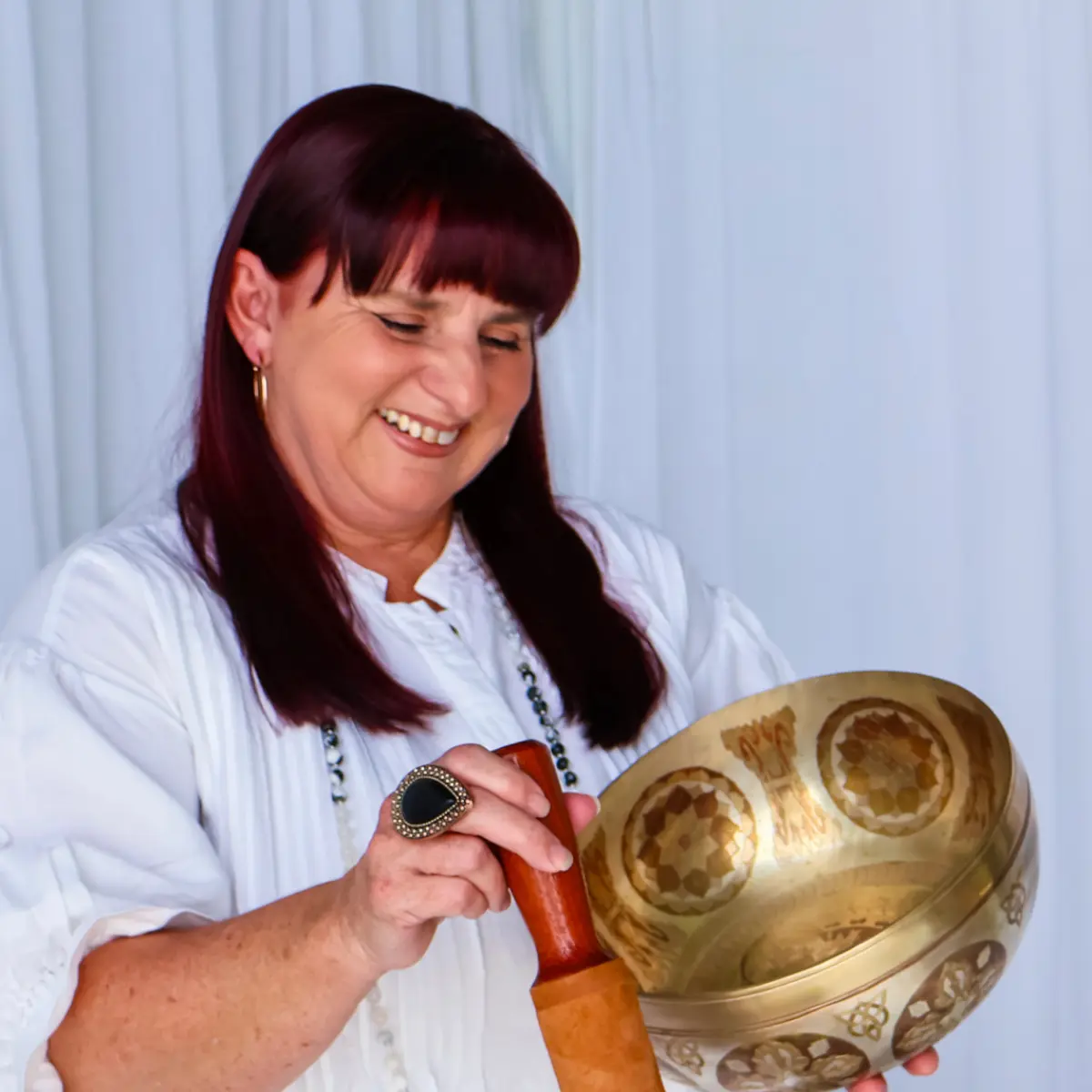
In a one-hour SoulNar session, the practitioner uses three specific instruments: a crystal singing bowl tuned to the frequency of the heart chakra, a 528Hz chime bar, and tingsha bells.
528Hz is sometimes called the "love frequency" within sound healing circles, associated with cellular repair and emotional opening. Crystal singing bowls produce a sustained, resonant tone that many people describe as penetrating, not just heard but physically felt in the chest, skull, and spine.
The science behind this points to something called entrainment. When an external rhythmic stimulus, such as a consistent sound frequency, is introduced, the brain tends to synchronise with it. This is why certain sounds can shift us from an alert, anxious state into a slower, more meditative one. Research has found that tension is significantly reduced following a sound bath featuring singing bowls, and that other negative mood states such as depression and anger are also substantially reduced, while spiritual well-being increases and physical pain decreases.

The Energy Healing Component
Alongside the sound work, the practitioner incorporates energy healing techniques drawn from Bianca's Reiki and ThetaHealing background. This involves working with the body's chakra system, the seven recognised energy centres that correspond to different aspects of physical, emotional, and mental health. The intention is to locate where energy feels blocked or stagnant and support the body's own capacity to rebalance.
Sound therapy is energy work at its core; everything is energy and everything is vibrating at different frequencies. When there are blocks or stagnation in the body and mind, there is dissonance. Sound therapy helps to attune the body to a more optimal frequency. The combination of auditory stimulation and direct energy work means SoulNar approaches the same goal from multiple directions, making it particularly effective for people who find conventional meditation difficult or who carry stress deeply in the body.

What SoulNar Can Help With
SoulNar is not a medical treatment and is not intended to replace professional healthcare. That said, people typically seek it out for a range of concerns, and practitioners and clients report meaningful supportive benefits in several areas.
Chronic stress and nervous system dysregulation are probably the most common reasons people book a session. Modern life keeps the nervous system in a near-constant state of low-grade activation, and SoulNar offers a structured, passive way to drop into genuine rest. Research on singing bowl meditation has shown highly significant effects on the tension subscale, with depressed mood and anxiety also significantly reduced post-session, and feelings of spiritual well-being increased.
Emotional processing and trauma release are another area where people find value. Sound frequencies can access parts of the nervous system that talk-based therapy doesn't always reach. Therapeutic sounds have been used for thousands of years as a non-invasive way to trigger the relaxation response, alleviate symptoms of chronic stress, and release suppressed emotions associated with past trauma.
People also turn to SoulNar for sleep difficulties, low energy, a sense of feeling emotionally blocked, and simply as a regular maintenance practice for overall wellbeing. It's not uncommon to book a session with no specific issue in mind and still walk away feeling as though something has shifted.

What to Expect in a Session
A SoulNar session runs for approximately one hour. You'll begin by having a brief conversation with your practitioner about what you're bringing to the session, whether that's physical tension, emotional heaviness, mental fatigue, or general stress.
You'll then lie comfortably on a treatment table, fully clothed, with your eyes closed. The practitioner begins working with the instruments, moving through a structured sequence. The crystal bowl is played first, its sustained tone filling the room and beginning the process of entrainment. The 528Hz chime adds a higher, cleaner frequency layer, while the tingsha bells mark transitions and are used to clear the energetic space.
Simultaneously, the practitioner incorporates energy healing work, using hand positions near or lightly on the body to work with the chakra system and support energetic release. Many people enter a state that's somewhere between sleep and waking, deeply relaxed but aware. Some experience visual imagery, emotional releases such as spontaneous tears, or a pleasant physical sensation of warmth or tingling. Others simply feel nothing and drift into near-sleep, which is just as valid and often where the deepest rest happens.
Afterwards, you'll be gently guided back to full wakefulness. Most people report feeling calm, clear-headed, and noticeably lighter. Some sessions bring up emotions that continue to process in the days that follow, which is considered part of the healing integration.
Is There Research Supporting Sound Healing?
SoulNar as a specific named modality hasn't been the subject of independent clinical trials, but its foundational components, crystal and Tibetan singing bowls combined with energy healing principles, have been studied with encouraging results.
A 2025 systematic review examining 19 clinical studies found that singing bowl therapy has been applied to a wide range of conditions including anxiety, depression, sleep disorders, pain, and cognitive function, with evidence of potential significant effects particularly on mental health outcomes.
Researchers have recommended that clinicians can suggest singing bowl meditation to patients seeking relaxation, stress reduction, and improved wellbeing, noting its low cost and low-technology nature as additional advantages.
The broader field of sound-based therapies is now attracting serious scientific interest. Research on vibrational medicine suggests that sound frequencies interact with the body's biofield and may support physiological changes including shifts in heart rate, blood pressure, and brainwave activity. This doesn't prove every specific claim made within sound healing traditions, but it does suggest the mechanism is real and worth further investigation.
SoulNar and the Chakra System
SoulNar works explicitly with the chakra model, a map of energy centres within the body originating from ancient Indian spiritual traditions. There are seven primary chakras, each associated with different glands, organs, and psychological functions.
The crystal singing bowl used in SoulNar is tuned to the heart chakra, which governs love, compassion, emotional resilience, and the relationship between the physical and spiritual. Working here first is deliberate. Many of the emotional patterns people carry, grief, fear, disconnection, difficulty receiving love, are considered to be held in or around the heart centre. By using the bowl's frequency to gently open and clear this area, the session creates space for the energy healing component to work more effectively.
The tingsha bells are used to clear stagnant energy from the wider auric field, the energetic boundary that surrounds the physical body. This is consistent with practices across many traditions, from Tibetan Buddhist ceremonies to traditional space clearing rituals.
Who Is SoulNar For?
SoulNar is suitable for most adults and is particularly well suited to people who are curious about energy healing but don't quite know where to start. Because the sound component is tangible, something you can physically hear and feel, it tends to be more accessible for those who are new to this kind of work or who approach it with healthy scepticism.
It works well for people going through significant life transitions, including grief, relationship changes, career shifts, or burnout recovery. It's also popular as a regular wellbeing practice for those who already have some experience with meditation, yoga, or energy work and want to go deeper.
That said, as with all forms of energy work, it's sensible to check in with your GP if you have a serious medical condition, are pregnant, or have a history of psychosis or severe psychiatric illness before booking. A good practitioner will always ask about your health history before beginning.

Frequently Asked Questions
What is the difference between SoulNar and a standard sound bath?
A sound bath typically involves a group lying in a room while instruments are played around them. SoulNar is a private, one-on-one session that combines the instruments with hands-on energy healing work, making it considerably more personalised and targeted. The practitioner is actively engaged with your energy throughout the session, not just playing instruments.
How many sessions do I need?
Many people feel a meaningful shift after a single session, particularly in terms of relaxation and mental clarity. For deeper or more longstanding emotional or energetic concerns, practitioners typically suggest a series of three to six sessions to allow for progressive integration.
Can I combine SoulNar with other therapies?
Yes. SoulNar works well alongside other holistic practices such as Reiki, kinesiology, breathwork, and somatic coaching. Many people also find it a helpful complement to conventional talk therapy or counselling.
Is SoulNar safe?
SoulNar is a non-invasive, drug-free therapy with no known adverse effects for healthy adults. Emotional releases during or after a session are normal and generally considered part of the process. If you have specific health concerns, consult your healthcare provider first.
How do I find a qualified SoulNar practitioner?
Look for practitioners who hold a SoulNar Practitioner Certificate from the SoulNar School of Sound and Energy Medicine. If you want to take the guesswork out of it entirely, Bodhi Holistic Hub lists vetted practitioners across Australia so you can read profiles, check credentials, and book with confidence.
What should I wear and how should I prepare?
Wear comfortable, loose clothing and avoid a heavy meal in the two hours before your session. Remove watches, jewellery, and any metallic items if possible. Arrive with a loose intention rather than a fixed expectation, and let the session unfold.
References and Further Reading
Professional Organisations
- International Institute for Complementary Therapists (IICT), which recognises and provides professional membership and insurance for SoulNar practitioners across Australia and internationally
- SoulNar School of Sound and Energy Medicine, the founding training body for the modality
Research and Scientific Foundation
- Goldsby, T.L., Goldsby, M.E., McWalters, M., & Mills, P.J. (2017). Effects of Singing Bowl Sound Meditation on Mood, Tension, and Well-being: An Observational Study. Journal of Evidence-Based Complementary & Alternative Medicine, 22(3), 401–406.
- Stanhope, J. et al. (2020). The human health effects of singing bowls: A systematic review. Complementary Therapies in Medicine, 51.
- Soleymani, A. et al. (2023). Exploring the healing power of singing bowls: An overview of key findings and potential benefits. EXPLORE: The Journal of Science and Healing.
- Lyu, X. et al. (2025). Therapeutic effects of singing bowls: A systematic review of clinical studies. Complementary Therapies in Clinical Practice.
Related Modalities
- Reiki is the natural companion to SoulNar, grounded in the same understanding of the body's energy field and chakra system, with many SoulNar practitioners holding Reiki certifications alongside their sound healing training.
- Crystal Therapy deepens SoulNar's frequency work by incorporating gemstones whose vibrational properties are thought to support specific energetic and emotional states.
- Biofield Tuning uses calibrated tuning forks to locate and address disruptions in the human biofield, making it a precise and complementary follow-on for anyone drawn to frequency-based healing.
- ThetaHealing works at the level of core beliefs and subconscious patterns, pairing well with SoulNar for clients who want to combine energetic clearing with deeper inner inquiry.
This guide was written by the Bodhi Holistic Hub team according to their editorial policy.
Last Updated: Apr 2026
Sound healing isn’t just something I do — it’s my devotion. It’s the path that found me, healed me, cracked me open and reassembled me into who I am today.
Bianca Mayers, founder of SoulNar Sound Healing Energy Therapy
Discover our vetted practitioners