Energy Healing
Pellowah Healing Technique

Pellowah Healing Technique: Expanding Consciousness Through Energy Healing
What Is Pellowah?
Pellowah is an angelic word for radical shift in consciousness. This form of healing connects all 12 strands of DNAready for activation. It also unblocks and realigns the meridians within the body, giving a feeling of connection and well-being. As the name suggests, it results in a radical shift in consciousness.
In many other forms of healing, subsequent results of the change and growth can be cathartic as old frameworks are broken down to create new ones. This is not the case with Pellowah. The growth and change brought about by Pellowah helps a person build on their old frameworks without the trauma. They gain a new perspective, therefore making better choices. Pellowah expands their consciousness, helping them to be more objective.
Many other forms of healing produce positive feelings that generally last two days to a week. Pellowah provides a feeling of well-being that seems to last, and in fact it gets stronger as time goes by. This is because the healing happens from the inside out. The energy changes you and the new you becomes the normal. To put it another way, Pellowah activates you so you generate or create the light from within. This modality can also be used in absent healing and can be used to heal animals and plants.

The Origin of Pellowah
Pellowah was channelled by Australian spiritual teacher Kachina Ma'an, also known as Robyn Bellingham, who received the complete system as a direct transmission. Unlike many healing modalities that draw on ancient lineages refined over centuries, Pellowah arrived as a whole, coherent method, and it has been taught and practiced in much the same form ever since. While the technique itself remains completely unchanged and uncompromised, our experience of it has evolved significantly over time. As the changing energetic landscape supports greater amounts of light, it allows for a much more profound and effective integration in recent years.
What began in Australia has grown into an international practice, but it retains its origins. The training system is carefully maintained through an official certification structure, and practitioners around the world are trained directly within that lineage.
One of the things that sets Pellowah apart from the outset is its intentional simplicity. There are no complex symbol systems to memorise, no diagnosis of a client's specific issues, and no channelling of the practitioner's own energy into the session. The technique is kept deliberately pure, which practitioners say is part of what makes it so potent.
How Pellowah Works
The theory behind Pellowah holds that human beings carry 12 strands of DNA, most of which lie dormant. A Pellowah session connects all twelve strands of DNA, seamlessly readying them for activation and aligning you with your highest path of consciousness. While this structural alignment prepares you for deeper evolutionary growth, the immediate experience of a session is a profound immersion in pure Source light. This powerful frequency clears your energetic field, unblocks and realigns your meridians, allowing you to instantly hold more awareness, access fresh perspectives, and feel a deeply restored connection to your own inner knowing.
The practitioner's role is deliberately hands-off in a deeper sense than just physical distance. They don't consciously direct the energy, don't set intentions for the client, and don't enter the client's energy field with their own awareness. This detachment is central to how Pellowah works. The practitioner holds space as a pure conduit, and the intelligent energy directs the flow of healing exactly where it's most needed.
From a scientific standpoint, Pellowah hasn't yet been the subject of dedicated clinical trials. The broader category it belongs to, biofield therapy, has attracted growing research interest, however. Peer-reviewed studies on practices like Reiki and therapeutic touch have found measurable effects on stress hormones, autonomic nervous system function, and pain perception. A 2015 systematic review published in Global Advances in Health and Medicine found evidence of physiological responses to biofield therapies even in the absence of physical contact. This doesn't confirm the specific mechanisms Pellowah describes, but it does suggest that hands-off energy work can produce real effects even when we can't fully explain how.
For now, the clearest evidence for Pellowah is experiential. Practitioners and recipients consistently report shifts in mental clarity, emotional ease, and a felt sense of expanded perspective, often in the days and weeks following a session rather than immediately on the table.

What Pellowah Can Help With
People come to Pellowah for a wide range of reasons. Some are navigating a major life transition and feel stuck or directionless. Others are living with chronic stress or anxiety and want support that goes deeper than symptom management. Some are simply curious about their own consciousness and want to develop their intuition or spiritual awareness.
Common reasons people seek out Pellowah include feeling disconnected from their sense of purpose, difficulty making clear decisions, persistent mental fatigue, a desire to break old patterns of thinking, wanting to deepen an existing spiritual practice, and needing grounded support through grief, change, or burnout.
It's important to be clear: Pellowah is a complementary practice. It doesn't diagnose or treat medical conditions and works alongside, not instead of, conventional medical care. What it reliably offers is a shift in how you relate to your own circumstances. Clients often describe greater mental clarity, a calmer baseline, and a felt sense of expansion that carries into daily life.

What to Expect in a Session
A standard Pellowah session runs for 60 to 90 minutes. There's a short intake conversation at the start, then the healing itself, followed by a quiet grounding period at the end.
During the session, you lie still and fully clothed while the practitioner works above your body. Many people notice warmth, tingling, or a deep sense of calm. Some experience vivid imagery or a gentle emotional release. Others feel relatively little during the session itself but notice significant shifts in their thinking, mood, or decision-making in the days that follow.
This delayed integration is actually characteristic of Pellowah. Because it works at the level of consciousness rather than the physical body, its effects tend to unfold gradually. Practitioners often suggest giving yourself space after a session, time in nature, quiet reflection, reduced screen time, to allow what's been activated to settle.
Pellowah and Your Spiritual Development
Pellowah occupies an interesting space in the landscape of energy healing because it's explicitly oriented toward consciousness expansion and spiritual growth, not just relaxation or symptomatic relief. Many people who are drawn to it are already engaged in some form of inner work, whether that's meditation, yoga, or other energy modalities, and they find that Pellowah deepens and clarifies what they're already doing.
That said, you don't need to hold any specific spiritual beliefs to benefit from it. The practice is non-denominational and works with clients from all backgrounds and worldviews. It doesn't ask you to believe anything in particular. It simply asks you to show up, lie still, and see what shifts.

How Many Sessions Do You Need?
There's no single answer to this. Many people find that even one session produces a noticeable and lasting shift. Others prefer to commit to a short series of three to six sessions to allow the work to build over time. If you're using Pellowah as part of an ongoing spiritual practice or working through a significant life challenge, regular sessions may suit you well.
One thing that's consistent in Pellowah's philosophy is that it doesn't aim to create dependence. The goal is to expand your own capacity for clarity and self-direction, so over time, the intention is that you need it less often, not more.
Umana: Kachina Ma'an's Next Evolution
If Pellowah was the beginning, Umana is the next step.
Channelled by Kachina Ma'an in 2023 and launched in Melbourne in March 2024, Umana is her second major healing contribution, and it builds on Pellowah's foundation while operating through an entirely different mechanism. The word "Umana" is an angelic term meaning "Evolutionary Breakthrough," and that name captures what distinguishes it from its predecessor.
Where Pellowah focuses on healing the whole person, mind, body, and spirit, the Umana Technique works by activating a unique meridian system within the body, including the higher chakras numbered 8 through 12. These are energy centres that sit above the physical body and, according to practitioners, govern our connection to soul purpose, collective consciousness, and spiritual evolution. Working with them is considered advanced terrain even within energy healing circles.
Kachina described Umana as "Spiritual Evolutionary Engineering to upgrade the whole system so we will evolve,"and it was brought through specifically as a tool for enlightenment, to help with the advancement of humanity as a collective. That's a broader ambition than personal healing, and it's part of what makes Umana feel distinct. Where Pellowah tends to bring clarity and groundedness, Umana is oriented toward accelerated spiritual growth and consciousness expansion at a deeper level.
Like Pellowah, Umana works through light touch and distance sessions, typically running for 30 to 60 minutes. Practitioners recommend waiting at least two weeks between sessions to allow full integration. Clients often describe the experience as profoundly quieting, with many noticing an emotional release, relief from long-held mental patterns, and a newfound sense of spiritual peace in the days that follow.
If you've already experienced Pellowah and are curious about what's next, Umana is a natural progression. It assumes a certain readiness, not in terms of prior experience, but in terms of willingness to expand. Many people find that a foundation in Pellowah makes Umana land more deeply, though it's by no means a prerequisite. Practitioner training for Umana is currently available across Australia and internationally, with Kachina Ma'an scheduled to run Umana Teacher Training in 2026.
Learning Pellowah Yourself
Pellowah training is offered at three levels. Levels 1 and 2 are typically taught together over a weekend and qualify you to offer Pellowah healing to others. Level 3 is the teacher training for those who want to initiate new practitioners, and is only taught by Kachina Ma'an. Many people choose to complete Levels 1 and 2 not to build a practice, but simply to access the technique for their own ongoing development, which is equally valid.

Frequently Asked Questions
What exactly is the Pellowah Healing Technique?
Pellowah is an Australian energy healing method developed in 2003 by Kachina Ma'an. It's a hands-off technique that works by expanding consciousness through what practitioners describe as the activation and connection of all 12 strands of DNA. Sessions promote clarity, purpose, and spiritual growth, and are deeply relaxing without involving any physical touch.
How is Pellowah different from Reiki?
Both are forms of energy healing, but they work quite differently. Reiki practitioners actively channel energy and often use specific symbols and intentions to address a client's needs. In Pellowah, the practitioner deliberately steps back, acting as a pure conduit without directing the outcome. Pellowah also has a much stronger focus on consciousness expansion and long-term personal development rather than immediate symptomatic relief.
What is the difference between Pellowah and Umana?
Both were created by Kachina Ma'an, but they operate differently. Pellowah works with the 12 strands of DNA and is focused on shifting consciousness, clarity, and personal alignment. Umana, channelled 20 years later, works with a distinct meridian system and activates the higher chakras 8 through 12, making it more focused on accelerated spiritual evolution. Many people experience Pellowah first and come to Umana when they feel ready to go deeper.
Is there scientific evidence for Pellowah?
There are no clinical trials specifically studying Pellowah at this stage. Biofield therapies as a broader category have been the subject of peer-reviewed research showing measurable effects on stress, pain, and autonomic nervous system function. The evidence base for energy healing is still developing, and Pellowah's specific claims around DNA activation and connection are not scientifically verified. That said, many people report consistent, meaningful outcomes.
What does a session actually feel like?
Most people describe a strong sense of warmth and relaxation, sometimes accompanied by tingling, a feeling of expansion, or vivid inner imagery. Some people become very still or fall into a light sleep. Others feel relatively little during the session and then notice a change in mood, clarity, or energy in the days that follow. Every person's experience is different, and sometimes the most significant shifts happen quietly over time.
How much does a Pellowah session cost?
In Australia, sessions typically cost between $90 and $150, though pricing varies based on the practitioner's experience and location. Some practitioners offer multi-session packages at a reduced rate. Umana sessions are similarly priced, with 30-minute options often available at a lower entry point.
How do I find a qualified Pellowah practitioner?
Look for someone who has completed at least Levels 1 and 2 of the official Pellowah certification through Kachina Ma'an's lineage. Bodhi Holistic Hub is a good starting point, as it lists vetted energy healing practitioners, making it straightforward to find someone with verified training and genuine experience.
Can children receive Pellowah?
Yes. Because Pellowah is completely non-invasive and involves no physical touch, it's well-suited for children, including those who are sensitive or anxious. Sessions for children are usually shorter to match their energy and attention.
Can Pellowah be done online or remotely?
Yes. Many Pellowah practitioners offer distance sessions, working across space in much the same way they would in person. Remote sessions are considered just as effective by practitioners trained in this approach, since the work happens at the level of the energy field rather than the physical body. The same applies to Umana.
References and Further Reading
Professional Organisations
Complementary Medicine Association (CMA Australia)
Research and Scientific Foundation
- Jain, S. & Mills, P.J. (2010). Biofield therapies: helpful or full of hype? A best evidence synthesis. International Journal of Behavioural Medicine, 17(1), 1-16.
- Ross, C.L. (2019). Energy Medicine: Current Status and Future Perspectives. Global Advances in Health and Medicine.
- Hammerschlag, R., Marx, B.L. & Aickin, M. (2014). Nontouch biofield therapy: a systematic review of human randomised controlled trials. Journal of Alternative and Complementary Medicine, 20(12)
- NICM Health Research Institute, Western Sydney University (Australian research centre for complementary medicine and biofield therapies)
Related modalities
- Reiki is the closest cousin to Pellowah in the energy healing space, also working with the body's biofield to promote relaxation and energetic balance, though with a more hands-on approach and a structured system of symbols.
- ThetaHealing similarly works at the level of consciousness and belief, using a meditative state to access and shift deep-seated patterns.
- Intuitive Energy Healing is a broad modality that, like Pellowah, works with the body's subtle energy systems to support emotional and spiritual wellbeing.
- Biofield Tuning uses tuning forks to detect and correct disturbances in the human biofield, making it another evidence-curious, non-invasive approach to energy-based care.
- Umana, also created by Kachina Ma'an, picks up where Pellowah leaves off, working with the body's higher chakras and a distinct meridian system to support accelerated spiritual evolution.
This guide was written by the Bodhi Holistic Hub team according to their editorial policy and reviewed by Rachael Simmelmann.
Last Updated : May 2026
The body's energies are designed to be self-correcting.
Donna Eden, author of Energy Medicine and pioneer in the field of energy healing
Discover our vetted practitioners
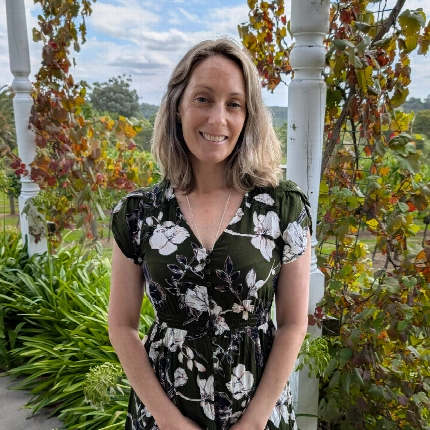
Rachael Simmelmann
View Profile