Energy Healing
Dance Movement Therapy
Dance Movement Therapy: Healing Through Movement and the Body
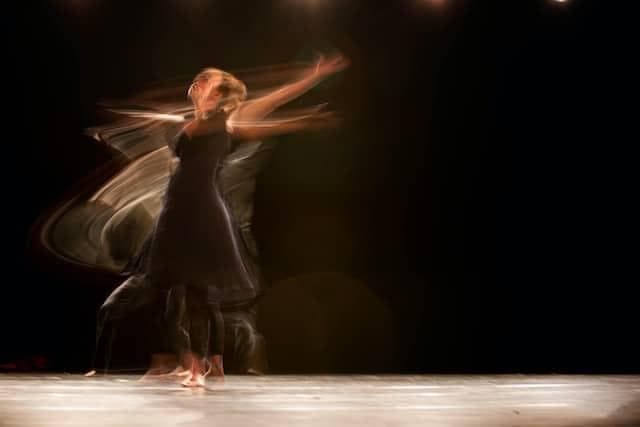
There's a kind of knowing that lives in the body and doesn't always have words. The slumped posture that arrives with grief before you've consciously registered you're sad. The way your chest opens when you feel safe. The restless energy in your legs when something in your life feels stuck. Dance movement therapy works with exactly this layer of human experience, the place where emotion, identity, and physical expression meet.
Dance movement therapy (DMT), sometimes called dance/movement therapy or movement psychotherapy, is a therapeutic approach that uses movement and dance as the primary means of supporting emotional, cognitive, social, and physical wellbeing. It's practised by trained therapists who understand both the psychology of movement and the body's role in holding and releasing experience. The movement doesn't need to look like dancing. It might be a gentle rocking, a shift in posture, a spontaneous gesture, or simply noticing the impulse to move and following it.
DMT is used across a wide range of clinical and community settings, including mental health care, trauma recovery, palliative care, aged care, disability services, schools, and personal development contexts. It's suitable for people of all ages, movement abilities, and backgrounds, including those who have never danced a day in their lives.
Origins and Background
Dance movement therapy emerged as a formal discipline in the United States in the 1940s, largely through the work of Marian Chace, a dance teacher who began working at St Elizabeths Hospital in Washington, D.C. Chace noticed that movement and rhythm had a uniquely powerful effect on patients who were withdrawn, uncommunicative, or deeply distressed. Her clinical work demonstrated that moving together in a group could restore a sense of connection and aliveness that words alone couldn't reach.
Around the same time, other pioneers were developing their own approaches. Mary Whitehouse, drawing on her background in Jungian psychology and modern dance, developed what she called "authentic movement," an approach to witnessing and following inner movement impulses rather than performing choreography. Rudolf Laban's system of movement analysis, developed in Europe, gave the field a shared vocabulary for describing how people move, through space, time, weight, and flow, that remains central to DMT practice today.
The field grew steadily through the latter decades of the twentieth century. The American Dance Therapy Association was founded in 1966, and professional bodies and training programmes have since developed across Europe, Australia, the UK, and beyond. In Australia, DMT is represented through the Dance Movement Therapy Association of Australasia (DMTAA), which sets standards for training and professional practice.

Marian Chace leading an early dance movement therapy group session at St Elizabeths Hospital in the 1940s
How Dance Movement Therapy Works
DMT operates on a core principle: the body and mind are not separate. How we move reflects how we feel, think, and relate. And, crucially, changing how we move can shift how we feel, think, and relate. This isn't metaphor. It reflects current neuroscience, particularly the understanding that the body and nervous system are active participants in emotional regulation, memory, and sense of self.
In practice, a DMT session creates conditions for what therapists call authentic movement, movement that arises from inner experience rather than performance or instruction. A therapist may offer a theme, an image, a piece of music, or a simple prompt like "notice what your body wants to do right now." From there, the client moves, the therapist witnesses and sometimes moves alongside them, and together they attend to what emerges.
Therapists trained in Laban Movement Analysis observe the quality of movement: is it direct or meandering, sustained or sudden, heavy or light? These qualities carry information about a person's emotional state, habitual patterns, and the places where movement becomes restricted or defended. This is where DMT differs from other movement-based practices like yoga or exercise. The goal isn't to move correctly or efficiently. It's to move authentically and to bring conscious attention to what that movement reveals.
Mirroring is another key technique. A therapist who gently reflects a client's movement back to them, matching their rhythm or quality, creates a felt sense of being seen and understood that can be deeply regulating. This is particularly powerful in work with people who have experienced early relational trauma or who struggle to feel connected to others.
Sessions can be conducted individually or in groups. Group DMT has its own therapeutic dimension, as moving together builds attunement, reduces isolation, and allows relational dynamics to be explored through the body in real time.

What Dance Movement Therapy Can Help With
DMT has a broad clinical reach. Its applications include trauma and PTSD, where body-based approaches are increasingly recognised as essential because trauma is stored in the body's nervous system, not only in memory or narrative. It's used to support people living with anxiety, depression, and chronic stress, as well as those navigating grief, loss, and significant life transitions.
In mental health settings, DMT is used with people experiencing psychosis, personality disorders, eating disorders, and the effects of prolonged institutionalisation. In neurological rehabilitation, it supports people recovering from stroke or living with Parkinson's disease, conditions where movement itself is both the challenge and the medicine.
DMT is widely used in aged care and dementia support, where it can reach people who are no longer easily reached through language. In paediatric and educational settings, it supports children with developmental differences, attachment difficulties, and social and emotional learning challenges.
People also seek DMT outside clinical contexts, simply to develop a kinder, more present relationship with their own body, to work through creative blocks, or to explore aspects of identity and experience that haven't found expression elsewhere.

What to Expect in a Session
A first DMT session often begins with a conversation, your therapist getting to know you, your history, what brings you in, and any physical considerations. From there, the movement component might be introduced gradually, beginning with simple body awareness exercises or gentle stretching, before expanding into more exploratory movement.
You don't need to be a dancer, or to "perform" in any way. The space is non-judgmental and the therapist isn't evaluating your movement aesthetically. Sessions typically run 50 to 90 minutes, and the pace is led by you.
After movement, there's usually time for reflection, talking about what came up, what you noticed, what surprised you. Some people find this verbal processing essential. Others find the movement itself is sufficient and that words feel almost beside the point.
Sessions can be held in person in a space large enough for movement, or, increasingly, online. Online DMT has grown significantly since the pandemic, and while some practitioners prefer in-person work, many of the core approaches translate well to video.
Dance Movement Therapy and Trauma
The connection between DMT and trauma treatment reflects a broader shift in how the therapeutic field understands trauma. Trauma isn't only a story about the past. It's a pattern in the body and nervous system that continues to shape the present. Approaches that engage the body directly, like DMT, somatic therapy, and EMDR, are increasingly positioned as essential complements to, or in some cases alternatives to, purely verbal trauma processing.
DMT's particular strength in trauma work lies in its gentleness and its respect for the body's own pace. Rather than directing the client to revisit or recount traumatic events, a DMT therapist creates a safe relational container in which the body can begin to move through what it has been holding. This might look like finding a posture that feels protective and then gradually exploring what it feels like to soften it. It might be discovering a quality of movement, strength or flow or groundedness, that the person hasn't felt access to in a long time.
For survivors of trauma where the body itself was the site of harm, DMT's emphasis on consent, client-led movement, and the therapist's role as witness rather than director makes it a particularly safe and empowering approach.

Frequently Asked Questions
Do I need any dance experience to do dance movement therapy?
None at all. DMT is not about dance skill or performance. The movement that emerges in sessions can be as small as a breath, a shift in weight, or a gesture. Many people who describe themselves as "not dancers" find DMT profoundly accessible precisely because there's no correct way to move.
Is DMT the same as expressive arts therapy?
They overlap but aren't identical. Expressive arts therapy is a broader field that uses multiple art forms, including visual art, music, drama, and writing, alongside movement. DMT is specifically focused on movement and the body as the primary medium. Some practitioners are trained in both.
Is DMT evidence-based?
Yes. A growing body of research supports DMT's effectiveness across a range of conditions including depression, PTSD, dementia, Parkinson's disease, and cancer-related distress. The evidence base is strongest for group DMT in mental health and neurological contexts, and research continues to expand.
How many sessions will I need?
It depends on what you're working with and what you're hoping for. Some people benefit from a short series of sessions focused on a specific concern. Deeper or more complex work, particularly around trauma, typically calls for a longer commitment. Your therapist will help you set realistic expectations after an initial assessment.
How do I find a qualified dance movement therapist?
Look for someone registered with the Dance Movement Therapy Association of Australasia (DMTAA), which maintains a directory of accredited practitioners. If you're also interested in how body-centred approaches connect to broader holistic care, Bodhi Holistic Hub is a good place to explore practitioners working across movement-based and somatic modalities. It's always worth an initial conversation with any practitioner to make sure you feel comfortable before committing to ongoing sessions.
Can DMT be combined with other therapies?
Yes. DMT integrates naturally with somatic therapy, trauma-informed counselling, mindfulness, and expressive arts approaches. Many practitioners work in an integrative way, drawing on multiple frameworks to meet each client where they are.
References and Further Reading
Professional Organisations
- Dance Movement Therapy Association of Australasia (DMTAA)
- American Dance Therapy Association (ADTA)
- Psychotherapy and Counselling Federation of Australia (PACFA)
Research and Scientific Foundation
- Koch, S.C., Kunz, T., Lykou, S., & Cruz, R. (2014). "Effects of dance movement therapy and dance on health-related psychological outcomes: A meta-analysis." The Arts in Psychotherapy
- Bradt, J., Shim, M., & Goodill, S.W. (2015). "Dance/movement therapy for improving psychological and physical outcomes in cancer patients." Cochrane Database of Systematic Reviews.
- Blue Knot Foundation (Australia): Trauma-informed practice frameworks for body-based therapies.
- Van der Kolk, B. (2014). The Body Keeps the Score: Brain, Mind, and Body in the Healing of Trauma. Penguin Books.
Related Modalities
- Somatic Coaching shares DMT's foundational belief that the body holds information the mind doesn't always have access to, and the two approaches work well together for clients interested in body-centred growth and self-awareness.
- Breathwork uses conscious breath as a direct pathway into the nervous system and emotional body, making it one of the most natural companions to movement-based therapeutic work.
- Holistic Counselling offers a whole-person framework for exploring emotional and psychological experience, and integrates naturally with DMT for clients who benefit from both verbal and embodied approaches.
- Shaking Medicine draws on the body's innate capacity to discharge stress and tension through tremor and movement, sharing DMT's respect for the body's own intelligence and its potential for self-regulation.
This guide was written by the Bodhi Holistic Hub team according to their editorial policy.
Last Updated: May 2026
The body is a multilingual being. It speaks through its colour and its temperature, the flash of the eye, the tone of the voice, the way the flesh moves.
Clarissa Pinkola Estés, PhD, Jungian analyst and author of Women Who Run With the Wolves
Discover our vetted practitioners

Elena Messina
View Profile