Energy Healing
Umana Technique
The Umana Technique: Australia's Newest Energy Activation Modality for Spiritual Growth and Expanded Consciousness
If you are ready for the next advancement in your personal and spiritual growth, if you feel the calling for more, and you know you are ready to meet it, the Umana Technique might be what you are looking for.
What is the Umana Technique
Umana is a revolutionary energy activation modality that works by activating a dormant meridian system within the physical and energetic body. This activation fully opens the five higher chakras above the head, advanced energy centres that support expansive shifts in consciousness, crystal clear clarity, and accelerated spiritual evolution.
Unlike traditional energy practices, Umana does not focus on treating specific symptoms or clearing past dense energies. Instead, it activates the dormant blueprints of your higher energy system, initiating a natural, profound unfolding that continues to expand long after your session or training concludes.
A Global Shift in Awareness
Channelled by renowned Australian spiritual teacher Kachina Ma'an and formally launched in March 2024, the Umana Technique has grown rapidly from its Australian roots, expanding onto the international stage.
When you step into this work, you join a global network of individuals dedicated to increasing consciousness and expanding awareness.
Is Umana Right For You?
Umana is a highly advanced energetic evolutionary tool. This technique is best suited for those who have been committed to their spiritual path for some time, who have already done significant inner work and foundational self-healing, and who feel an undeniable internal resonance that they are ready for the absolute next step in human evolution.
What Does "Umana" Mean?
Umana is an angelic word that translates directly to "evolutionary breakthrough."
Kachina Ma'an describes the modality as evolutionary engineering, brought through specifically to upgrade the human energetic blueprint and advance human potential, structurally transitioning individuals into 12-chakra beings.
By rebuilding and expanding this energetic architecture, Umana allows both personal and collective evolution to accelerate at an unprecedented pace, giving us the capacity to hold and navigate the higher frequencies now entering our planet.

Origin and History
Umana was channelled by Kachina Ma'an, who is also the founder of the world-renowned Pellowah Healing Technique (channelled in 2003). While the two modalities perfectly complement one another and are often used interchangeably by advanced practitioners, they serve distinct evolutionary purposes.
Pellowah focuses on a radical shift in personal consciousness, expanding your capacity to perceive and hold light. Umana directly engages Divine Consciousness, unlocking a higher, more advanced awareness and granting direct access to deep, divine wisdom.
Kachina Ma'an is a Queensland-based spiritual teacher who has dedicated her life to the evolution of human consciousness. In 2003, guided by a profound series of visions and dreams, she channelled the Pellowah Healing Technique, which over the subsequent two decades became a globally recognised modality.
In 2023, Kachina received a new transmission: The Umana Technique. Umana arrived precisely for this moment in human history. It was brought through because we, as a collective, are finally ready for the next level of energetic advancement, greater awareness, and personal evolution.
The very first Umana Technique Practitioner Training was held in Melbourne in March 2024. Marking a major milestone in February 2025, Kachina Ma'an taught her first Umana Teacher Trainer Workshop in Melbourne. Kachina continues to teach Umana teacher training in Queensland and Victoria. Today, while these qualified teachers are training practitioners all over Australia and watching the modality spread across the world, Kachina Ma'an remains the sole teacher at the Teacher Trainer level, ensuring the absolute energetic integrity, purity, and consistency of the Umana Technique as it expands globally.

How the Umana Technique Works
Most energy healing modalities in the Western tradition work with the seven main chakras: the energy centres that run from the base of the spine to the crown of the head, each linked to aspects of physical, emotional, and mental wellbeing. The Umana Technique extends beyond these into what are called the higher chakras, specifically the 8th through 12th, which sit above the physical body and are associated with spiritual perception, expanded awareness, and connection to higher states of consciousness.
Each higher chakra governs a different dimension of spiritual capacity:
- The 8th Chakra enables true spiritual perception and cosmic wisdom beyond the limitations of the self and the Earth.
- The 9th Chakra acts as the gateway where your higher, enlightened abilities lie dormant, waiting to be released.
- The 10th Chakra reclaims and manifests advanced skills, talents, and wisdom mastered across all previous lifetimes.
- The 11th Chakra initiates an energetic ascension process, allowing for instantaneous manifestation and transcending time and space.
- The 12th Chakra establishes a direct connection with Source, bringing unified wholeness and multi-dimensional mastery while staying completely grounded.
Alongside the chakra activation, the technique works with a system of ten dormant meridians within the body. These are distinct from the traditional meridians mapped in Traditional Chinese Medicine, which are well-established in integrative medicine and form the basis of acupuncture and related therapies. The Umana meridians are a newly available pathway, one that allows higher frequencies of consciousness to be integrated into the physical system.
To activate these pathways, practitioners are trained and certified by a qualified Umana teacher, with founder Kachina Ma'an remaining the sole teacher exclusively at the Teacher Trainer level to ensure the absolute integrity of the modality. During a session, a certified practitioner applies a structured sequence of light touch on specific points of the upper body, face, and head, or works entirely without touch for remote sessions. This advanced activation can be received from anywhere in the world with no reduction in effect.
From a conventional scientific standpoint, higher chakras and newly mapped meridians sit in the domain of energetic and spiritual medicine rather than evidence-based biology. No clinical trials of the Umana Technique have been conducted yet, which is entirely expected given it launched publicly only in 2024. The broader field of biofield healing, which includes practices like Reiki, therapeutic touch, and external Qigong, is the subject of growing academic interest. A 2015 landmark paper in Global Advances in Health and Medicine proposed biofield physiology as an emerging scientific discipline, and a 2025 scoping review mapped a rapidly expanding clinical research landscape for biofield therapies broadly. The Umana Technique operates within this wider context of energetic medicine, and more specific research will take time to develop.

What to Expect in a Session
A Umana Technique session is a beautiful, deeply nurturing, and relaxing experience. It is a space designed for you to completely let go, relax, and allow the energy to unfold exactly as it needs to, without any attachment to the outcome.
During an In-Person Session
You will remain fully clothed and simply lie down comfortably on a healing table. Your practitioner will maintain a light, gentle touch at all times, placing their hands on specific points across the head, face, arms, body, and back.
During a Remote Session
Remote sessions work with equal effectiveness, and many clients prefer being in their own quiet, undisturbed space. You simply need a quiet, uninterrupted space at the agreed time. If there are significant time zone differences, you can even receive your remote session while you sleep.
How to Prepare
Hydration matters, so drink plenty of water before your session to support the energetic integration. You will need to remove any smartwatches, Fitbits, or wearable technology before the session begins. Unlike many other modalities, you don't need to prepare a specific intention. The Umana energy operates with its own divine intelligence and will always be exactly what it needs to be for your unique evolution.
During the Session
Every single session is completely different, and there is no "right" way to experience Umana. Most people notice a deep calm settling in very quickly. You may experience physical sensations like warmth, tingling, or a vast sense of expansion. You might receive visual messages, insights, or sudden clarity, or drop into a beautiful, deep sleep. Spontaneous emotional releases or old memories surfacing are also completely normal. Alternatively, you may notice very little during the session itself. All of these responses are entirely normal and to be expected. Each session will be unique and no two sessions will ever be the same.
After the Session and Integration
Umana runs for either 30 or 60 minutes, but the energy continues to work long after the session ends. Many clients find that changes emerge gradually over the days and weeks that follow.
Because Umana upgrades the energetic system, the true results of a session show up in how you actively live, create, and relate to the world. Clients consistently find the integration process to be supportive and expansive, with the benefits dropping in gradually and actually increasing in effect over time. Some of the most common shifts clients report in the weeks following a session include a profound sense of elevated clarity, feeling as though they are looking at their life through a completely fresh, expanded perspective; a shift in how they relate to themselves and others, connecting from a place of harmony and authentic alignment; a renewed sense of passion for life, goals, and creative projects; and a natural, effortless pull toward tasks and ventures that align with their highest inner potential.
Because Umana initiates deep energetic upgrades, you must wait at least two weeks between sessions to allow for full integration before booking another.
You are the ultimate judge of your own path. Some people find that one session is exactly what they needed, while others choose to have a few. You will know when you are ready for your next step.
Who Is the Umana Technique For?
The Umana Technique is for anyone who feels genuinely curious or called to it, and the broad consensus among practitioners is that if you've found your way to Umana, the timing is probably right.
That said, certain groups tend to find it particularly resonant. People who've worked extensively on themselves through therapy, meditation, or other healing modalities and feel they've reached a plateau. Those navigating significant transitions, whether in career, relationships, or identity. Practitioners of other healing modalities who want to expand their energetic capacity. And people with an existing spiritual practice who feel ready for the next dimension of their development.
The minimum age for sessions and training is a mature 16 years old, and each practitioner will advise accordingly.

Becoming a Umana Technique Practitioner
The full practitioner certification takes just one intensive day. During the workshop, participants receive their practitioner attunement and are qualified to facilitate sessions for others in person or remotely. No prior healing qualifications are required, and many people who enrol do so primarily for their own development rather than professional practice.
The curriculum covers the purpose and principles of the technique, how to facilitate both in-person and remote sessions, and how to apply Umana to spaces and environments, not just people. Each participant receives a comprehensive training manual and a certificate of completion.
The teacher-training pathway, which qualifies someone to certify other practitioners, requires the practitioner course as a prerequisite and can only be completed directly with Kachina Ma'an, who visits key Australian cities several times a year and occasionally travels internationally for training events.
Frequently Asked Questions
What is the Umana Technique?
The Umana Technique is an energy activation modality channelled by Australian spiritual teacher Kachina Ma'an in 2023. It works by activating ten dormant meridians in the body and opening the higher chakras (8th to 12th), supporting shifts in consciousness, clarity, and spiritual growth. The first public practitioner training was held in March 2024 in Melbourne, and the technique has since spread to practitioners across Australia and internationally.
Is it the same as Reiki or other energy healing?
They share the broader category of biofield or energetic healing, but the Umana Technique is distinct in its focus and method. Rather than working with the traditional seven chakras or established meridian systems, it activates a new meridian network and higher chakras that sit above the physical body. It's framed as an activation rather than a treatment, which means it's not directed at clearing specific symptoms but at opening new energetic capacity.
Who is it for?
Anyone curious about their own growth or spiritual development. It works well for people who feel they've plateaued in their personal development work, those navigating major life changes, existing healing practitioners wanting to expand their toolkit, and anyone drawn to consciousness-based approaches. A background in energy healing or spirituality practices is recommended.
What might I feel during or after a session?
Experiences vary widely. During a session, some people feel warmth, tingling, or a sense of expansion. Others slip into deep relaxation or a near-sleep state. Emotional releases, visual imagery, and sudden clarity are all common. Others notice very little during the session and observe changes only in the weeks that follow through clearer thinking, better sleep, increased energy, perspective shifts, or a new way of relating to life's challenges.
Can I receive a session remotely?
Yes. Because the Umana Technique works through the energetic field rather than physical contact, remote sessions are standard and equally effective. You simply need a quiet, undisturbed space at the agreed time.
How much does a Umana Technique session cost?
In Australia, a 60-minute session typically costs between $100 and $180, with 30-minute sessions generally ranging from $70 to $110. Prices vary depending on the practitioner's experience, location, and whether the session is in-person or remote. Practitioner training workshops usually sit between $395 and $600 for the one-day certification, depending on the teacher and location.
How do I find a qualified practitioner?
Look for someone who has trained directly in the Kachina Ma'an lineage and holds a current certificate of completion. Bodhi Holistic Hub lists vetted practitioners across Australia, and it's a straightforward way to find someone whose experience and approach feel right for you and book with confidence.
How many sessions will I need?
Many people experience meaningful shifts from a single session. Others prefer to return regularly, finding each session builds on the last. There's no prescribed number. The general guidance is to leave at least two weeks between sessions to allow the energy to integrate fully before adding more.
References and Further Reading
Professional Organisations
- Complementary Medicine Association (CMA Australia)
Research and Scientific Foundation
- Rubik, B., Muehsam, D., Hammerschlag, R., & Jain, S. (2015). "Biofield Science and Healing: History, Terminology, and Concepts." Global Advances in Health and Medicine
- Hammerschlag, R., Levin, M., McCraty, R. et al. (2015). "Biofield Physiology: A Framework for an Emerging Discipline." Global Advances in Health and Medicine
- Tressoldi, P. et al. (2021). "Perspectives, Measurability and Effects of Non-Contact Biofield-Based Practices: A Narrative Review of Quantitative Research."
- Sprengel, M.L. et al. (2025). "Biofield Therapies Clinical Research Landscape: A Scoping Review and Interactive Evidence Map." Journal of Integrative and Complementary Medicine.
Related Modalities
- Reiki is a Japanese energy healing practice where practitioners channel energy through light touch or hovering hands to promote balance and relaxation
- ThetaHealing works with theta brainwave states to access subconscious beliefs and facilitate change at a deep level, complementing Umana's focus on expanding consciousness and awakening dormant capacities within the system.
- Intuitive Energy Healing draws on the practitioner's energetic perception to work across physical, emotional, and spiritual layers, and integrates naturally with the heightened awareness that Umana activations tend to open up.
- Spinal Energetics works with the intelligence held within the spine and nervous system to release stored tension and facilitate energetic unwinding, offering a grounded physical complement to the higher-chakra and meridian work of the Umana Technique.
- Pellowah Healing Technique is an Australian-channelled energy modality that expands consciousness by reconnecting all 12 strands of DNA and increasing the capacity for positive change, making it the most direct precursor to the Umana Technique and a natural first step for anyone drawn to Kachina Ma'an's lineage of consciousness-based healing.
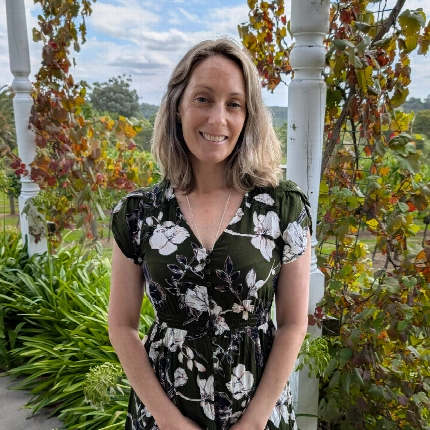
This guide was written by the Bodhi Holistic Hub team according to their editorial policy and reviewed by Rachael Simmelmann.
Last Updated : May 2026
The Umana Technique is setting up the consciousness of humanity at this vital time of change.
Kachina Ma'an, Founder, Umana Technique© and Pellowah Healing Technique©
Discover our vetted practitioners
Rachael Simmelmann
View Profile