Energy Healing
Therapeutic Radiesthesia
Therapeutic Radiesthesia: How the Body's Subtle Signals Can Guide Your Health
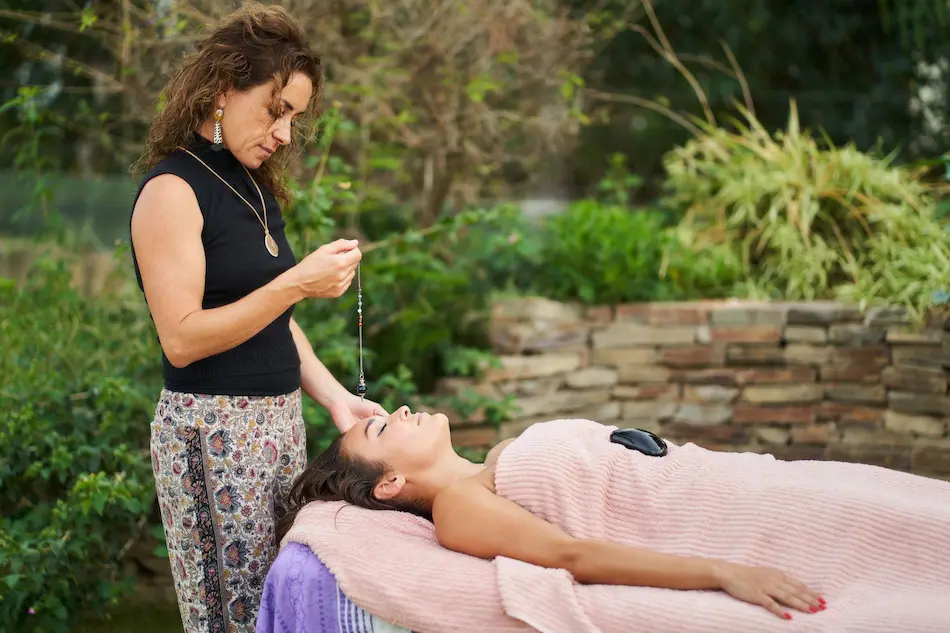
Most people have heard of dowsing, even if they picture it as something a wandering figure does across parched earth with two sticks. Therapeutic radiesthesia takes that same foundational idea, detecting subtle energies through a physical instrument, and applies it directly to health and wellbeing. Practitioners use a pendulum or dowsing rod to assess the body's energetic state, identify areas of imbalance, and support the body's own capacity to heal.
It's not mainstream medicine, and it doesn't claim to be. Therapeutic radiesthesia sits firmly in the world of complementary and energy-based healing. But for people who've found conventional approaches incomplete, or who want a different kind of lens on their health, it offers something genuinely distinct: a practice that treats the body as an energetic system rather than a collection of symptoms.
A Practice with Deep Roots
The word "radiesthesia" comes from the Latin radius (ray or radiation) and the Greek aesthesia (perception). It describes the capacity to detect subtle radiations or energies that our ordinary senses don't consciously register. The term was coined around 1929 by Abbé Alexis Bouly, a French Catholic priest who wanted a more precise name for what had previously been called dowsing or rhabdomancy.
Dowsing itself goes back centuries, with documented use in 16th-century Europe for locating underground water and mineral deposits. But the 20th century brought a meaningful shift, particularly in France and Switzerland, where physicians, priests, and researchers began applying radiesthetic tools specifically to health assessment. Abbé Alexis Mermet, a Swiss priest and one of the most extensively documented radiesthesists of his era, demonstrated the use of the pendulum for locating missing persons and assessing physical conditions. His 1935 book Principles and Practice of Radiesthesia remains a foundational text in the field and has been translated into multiple languages.
French researchers Léon Chaumery and André de Bélizal later expanded the theoretical framework considerably, investigating what they called "neutral radiation" and its potential effects on biological organisms. Their work helped shape the form of therapeutic radiesthesia practised today, particularly in Europe and increasingly across the English-speaking world.

How Therapeutic Radiesthesia Works
This is where practitioners and sceptics tend to part ways, and it's worth being honest about that tension.
The traditional explanation holds that the practitioner acts as a kind of human antenna, registering subtle energetic signals from the body or its surroundings through something called the ideomotor response. The ideomotor response is a well-documented physiological phenomenon where unconscious mental activity produces small, involuntary muscle movements. These micro-movements cause the pendulum to swing or the rod to shift, and the direction and pattern of that movement carries information the practitioner has trained themselves to read.
From a conventional scientific perspective, what's being measured is likely a combination of unconscious sensory processing and heightened perceptual sensitivity, rather than anything outside the known electromagnetic spectrum. From an energy medicine perspective, practitioners describe detecting disruptions in the body's biofield, a term used increasingly in integrative medicine to describe the complex field of energy and information that surrounds and permeates living systems.
Neither explanation is fully proven, and good practitioners will be upfront about that. What does exist is a centuries-long tradition of practice, a consistent internal methodology, and genuine scientific interest in biofield medicine more broadly.
What Therapeutic Radiesthesia Is Used For
In a therapeutic context, practitioners use radiesthesia to assess the body's overall energetic state, identify areas where energy flow may be blocked or disrupted, and test the compatibility of remedies, nutritional supplements, or treatments with an individual's system. Some practitioners integrate it with nutritional assessment; others combine it with homeopathy, herbal medicine, or other complementary modalities.
Common reasons people seek out therapeutic radiesthesia include chronic fatigue or unexplained symptoms that haven't resolved with conventional approaches, wanting to explore potential sensitivities to foods or environmental substances, support during recovery from illness, and a broader interest in understanding their health from an energetic perspective.
Responsible practitioners are clear that therapeutic radiesthesia does not diagnose medical conditions. It's an assessment tool for exploring energetic patterns and supporting wellbeing, not a replacement for medical care. That distinction matters, and how a practitioner handles it tells you a great deal about their integrity.
What to Expect in a Session
Sessions are typically calm and conversational. The practitioner will usually begin by taking a health history and discussing your current concerns. They'll then work with their instrument, most often a crystal or wooden pendulum, to assess the energetic patterns they're observing.
Depending on the practitioner's approach, they may work directly with you present, asking you to hold certain positions or focus on particular areas while they observe the pendulum's responses. Others work remotely using a name, photograph, or written question as a focal point. This practice is sometimes called distant radiesthesia, and many clients report finding it equally effective to in-person work.
Sessions typically run between 45 minutes and 90 minutes. The practitioner will share what they've observed and may suggest supportive next steps, whether that's specific supplements, dietary adjustments, referrals to other practitioners, or simply areas worth monitoring. You won't feel anything during the assessment itself. It's completely non-invasive and requires nothing from you physically beyond being present.

Radiesthesia, Geopathic Stress, and the Wider Energy Picture
Therapeutic radiesthesia doesn't stop at the body's boundaries. Many practitioners also work with the energetic qualities of spaces, assessing what's sometimes called geopathic stress, the idea that certain earth radiation patterns, underground water veins, or electromagnetic disturbances in a built environment can affect the people living or working within them.
This environmental application connects therapeutic radiesthesia to traditions like geomancy and Feng Shui, where the relationship between people and place is treated as central to health. Some clients seek out a radiesthesia practitioner specifically because they suspect their home or work environment is affecting their sleep, mood, or chronic symptoms.
Within the broader family of energy medicine, therapeutic radiesthesia shares conceptual territory with kinesiology, which uses muscle testing as a feedback mechanism, and with bioenergetic assessment tools like the Lecher antenna, a calibrated instrument used to detect energy frequencies across a measured scale.
Is There Scientific Evidence?
Honestly, the peer-reviewed research specifically on radiesthesia is limited and mixed. A number of controlled studies on water dowsing have produced results no better than chance, while others have documented statistically significant findings that remain unexplained within conventional frameworks. The science is genuinely unsettled.
What's clearer is the growing scientific interest in biofield medicine more broadly. Research published through bodies like the National Institutes of Health's National Center for Complementary and Integrative Health and work conducted at the Institute of Noetic Sciences suggests that the body's electromagnetic and subtle energy fields are considerably more complex than standard biomedical models account for. This doesn't prove that radiesthesia works in exactly the way practitioners describe, but it places the conversation in a more nuanced landscape than simple dismissal allows.
The Australian National Institute of Complementary Medicine (NICM Health Research Institute) at Western Sydney University has also contributed significantly to research on complementary and integrative medicine, helping establish more rigorous frameworks for evaluating practices that sit outside mainstream clinical models.
Practitioners who acknowledge this uncertainty openly, and who work within the clear bounds of complementary care rather than making medical claims, tend to be the most trustworthy guides in this field.
Frequently Asked Questions
What conditions can therapeutic radiesthesia help with?
Practitioners work with a wide range of concerns, including fatigue, digestive issues, stress, food sensitivities, and general feelings of being "off" without a clear clinical explanation. Because it's an energetic assessment tool rather than a diagnostic one, it's most often used alongside conventional care rather than instead of it. It can be particularly useful when someone is carrying multiple unexplained symptoms and wants a different perspective on what might be driving them.
Is therapeutic radiesthesia safe?
Yes. The assessment itself involves no physical intervention, no electrical equipment, and no substances. It's completely non-invasive. The risk is not in the practice itself but in any practitioner who makes unsupported medical claims or discourages someone from seeking conventional care when that care is clearly warranted. Trust your instincts if something feels off in how a practitioner presents themselves.
How do I find a good practitioner?
There's currently no single governing body for therapeutic radiesthesia in Australia, so doing your own research matters. Look for practitioners who are transparent about their training, who clearly state they don't diagnose medical conditions, and who work within a broader integrative or complementary health framework. Bodhi Holistic Hub lists verified practitioners across energy healing and complementary modalities, making it easier to find someone with the right background, ethical approach, and relevant experience.
How many sessions will I need?
This varies considerably. Some people come for a single assessment out of curiosity or to address a specific question; others work with a practitioner over several months as part of a broader health protocol. A good practitioner will be upfront about what they can realistically offer and won't push for ongoing sessions beyond what's genuinely useful.
Can a session be done remotely?
Yes. Many practitioners work remotely using your name, date of birth, or a photograph as a focus for the assessment. Some clients find this equally effective as in-person work; others prefer being in the room. It's worth discussing your preference with a practitioner before booking.
Does radiesthesia conflict with other health treatments?
No. Therapeutic radiesthesia is a complementary approach by nature. It works alongside conventional medicine, naturopathy, or other holistic treatments rather than replacing them. Most practitioners actively encourage clients to continue with any conventional care that's helping.
References and Further Reading
Professional Organisations
- British Society of Dowsers, one of the longest-established bodies in this field, offers practitioner resources and research archives
- American Society of Dowsers, with educational materials and practitioner directories
Research and Scientific Foundation
- Institute of Noetic Sciences (IONS), which conducts peer-reviewed research into human consciousness, biofield science, and subtle energy perception
- NICM Health Research Institute, Western Sydney University, Australia's leading centre for complementary medicine research
- National Center for Complementary and Integrative Health (NCCIH), a division of the U.S. National Institutes of Health with an overview of energy medicine
- Journal of Alternative and Complementary Medicine, a peer-reviewed publication covering integrative health research including biofield therapies
Related Modalities
- Kinesiology uses the body as a feedback instrument through muscle response testing to assess energetic and nutritional imbalances, making it a natural companion to the assessment-focused nature of radiesthesia.
- Biofield Tuning works with the body's electromagnetic field using tuning forks to detect and resolve areas of energetic disruption, sharing radiesthesia's core interest in subtle energy patterns.
- Crystal Therapy frequently intersects with radiesthesia directly, as crystal pendulums are one of the primary instruments practitioners use, and many therapists work fluidly across both modalities.
- Intuitive Energy Healing broadens the energetic lens further, drawing on a practitioner's trained perceptual sensitivity to identify and address imbalances in a way that complements radiesthesia's more structured, instrument-based approach.
This guide was written by the Bodhi Holistic Hub team according to their editorial policy.
Last Updated : May 2026
Man is like a battery. He possesses his own radiations and is under the influence of the radiations of everything that surrounds him.
Abbé Alexis Mermet, author of Principles and Practice of Radiesthesia (1935)
We would love to hear from you