Spiritual Practices
Palm Reading
Palm Reading: A Modern guide to Palmistry
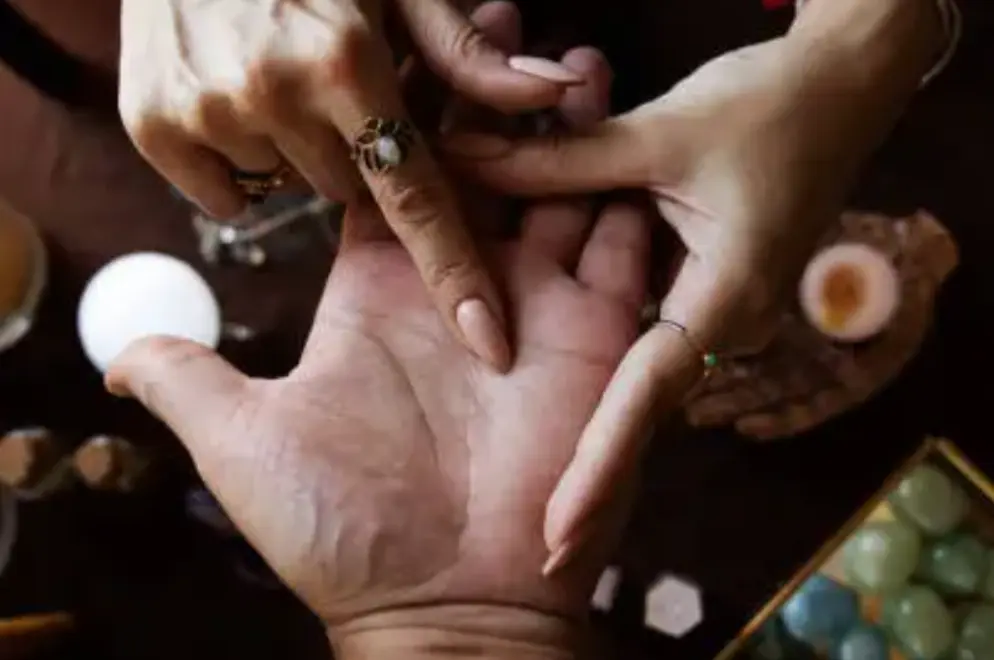
Palm reading, also known as palmistry or chiromancy, is an ancient analytical practice that interprets the lines, mounts, shapes, and textures of your hands to reveal personality traits, emotional patterns, and life tendencies. It is best suited for curious, self-reflective individuals seeking fresh perspectives on personal growth, career direction, or relationship dynamics. Rather than predicting a fixed future, modern palm reading offers a grounded tool for self-awareness, helping you recognise innate strengths and blind spots through a supportive, holistic lens.
Whether you feel stuck at a personal crossroads or simply want to understand your natural temperament better, looking closely at your hands can spark meaningful conversations about where you are heading.
History and Origins of Palm Reading
People have studied the patterns on human hands for more than 4,000 years. The earliest written records of palm reading trace back to ancient India, where it formed a branch of Samudrika Shastra, a traditional Sanskrit system dedicated to reading body features. From the Indian subcontinent, the practice travelled along trade routes into China, Tibet, Persia, and ancient Greece.
In ancient Greece, philosophers took a keen interest in the mechanics of the hand. Aristotle famously wrote about palmistry in his treatise De Historia Animalium (History of Animals) around 350 BCE, noting that lines are not etched into the human hand without reason, as they reflect both natural constitution and lived experience. Alexander the Great reportedly used palm reading to assess the character and loyalty of his military officers.
During the Middle Ages in Europe, palm reading fell out of favour with religious authorities, who viewed it with suspicion. However, interest surged again during the Renaissance, and by the 19th century, figures like Casimir Stanislas D'Arpentigny and William John Warner (known professionally as Cheiro) systematised palmistry into the structured framework used today. Over the last century, the focus has shifted away from fatalistic fortune-telling toward psychological and holistic self-discovery.
How Palm Reading Works: Symbolic and Scientific Perspectives
To understand palm reading properly, it helps to look at it from two distinct angles: the traditional symbolic framework and what modern science observes about the human hand.
The Symbolic Perspective
In traditional palmistry, the hand acts as a physical mirror of your inner life. Practitioners examine both hands because each serves a different purpose:
-
The passive hand (usually your non-dominant hand) represents your inherited traits, innate potential, and subconscious tendencies.
-
The active hand (your dominant hand) reflects how you have used that potential, showing the impact of your choices, habits, and environment over time.
Because hands change subtly throughout life as skin creases deepen or fade, readers view these shifts as reflections of personal growth and changing circumstances.
The Scientific and Medical Perspective
From a biological standpoint, the lines on your palms are simply natural flexion creases that form before birth so the skin can fold smoothly when you grip objects. While medical science does not support the idea that these lines predict specific future events, researchers have observed mild links between certain physical hand traits, such as the relative length of your index and ring fingers (2D:4D ratio), and natural personality tendencies like risk tolerance.
In a holistic session, however, the real value comes from psychology rather than biology. Much like journaling or visual prompt cards, examining the shapes and lines of your hands gives your brain a structured framework to step outside routine thought patterns, notice emotional habits, and talk openly about your strengths and blind spots. A skilled practitioner uses your hand as a grounded conversational mirror to help you process thoughts and gain clarity.
Key Features a Palm Reader Examines
A thorough palm reading looks at far more than just a single line. Practitioners assess the entire hand as an interconnected system.
1. Hand Shapes (The Four Elements)
Palmistry categorises hands into four elemental shapes based on palm length and finger proportions:
-
Earth hands have square palms and short fingers, often associated with practical, grounded, and reliable personalities.
-
Air hands feature square or rectangular palms with long fingers, linking to analytical thinking, curiosity, and strong communication skills.
-
Water hands have long, oval palms and long, flexible fingers, suggesting emotional depth, empathy, and creative sensitivity.
-
Fire hands display rectangular palms with short fingers, reflecting high energy, enthusiasm, and natural leadership.

2. The Major Lines
Most readings focus on four primary creases across the palm:
-
The Heart Line runs horizontally across the upper palm beneath the fingers. It reflects emotional expression, relationship styles, and how you process affection.
-
The Head Line stretches across the middle of the palm. It relates to learning styles, decision-making, intellectual curiosity, and how you handle mental focus.
-
The Life Line curves around the base of the thumb. Contrary to popular myth, it does not measure how long you will live. Instead, it indicates vitality, physical resilience, and how you respond to major life changes.
-
The Fate Line (present on many, though not all, hands) runs vertically up the centre of the palm toward the middle finger. It highlights career direction, sense of purpose, and how external circumstances influence your path.
3. The Mounts
The mounts are the fleshy cushions at the base of each finger and along the outer edge of the palm. Named after classical planetary archetypes (such as Jupiter, Saturn, Apollo, Mercury, Venus, and Luna), the prominence of these pads indicates where your natural energy and motivation tend to concentrate.
Benefits and Common Concerns It Helps With
Because palm reading is a reflective, complementary practice rather than a clinical treatment, its benefits centre on clarity, self-understanding, and emotional grounding. People commonly book a session when dealing with:
-
Career crossroads and vocational uncertainty: Identifying whether you thrive in structured environments, creative roles, or leadership positions based on your elemental hand type and Head Line traits.
-
Relationship patterns: Gaining insight into how you communicate needs, set boundaries, and process emotional intimacy through the Heart Line.
-
Personal blind spots and stress habits: Recognising tendencies toward overthinking, people-pleasing, or burnout so you can adjust your daily habits.
-
Life transitions: Finding grounded perspective during major shifts such as relocating, ending a relationship, or starting a new venture.
-
Creative blocks: Reconnecting with natural strengths and underused talents highlighted by the mounts of Apollo and Mercury.
As renowned analytical psychologist Carl Jung once observed regarding symbolic systems of self-inquiry,
"The pendulum of the mind oscillates between sense and nonsense, not between right and wrong."
Reflective tools like palmistry work best when they help you step outside routine thought patterns and view your choices with fresh curiosity.

What to Expect in a Palm Reading Session
If you have never had your palms read professionally, knowing how a session unfolds can help you relax and get the most value from the experience.
-
Initial Chat and Intention Setting: Your practitioner will usually begin by asking what brought you in and whether you have specific questions around work, relationships, or personal growth. You do not need to share deeply personal details upfront if you prefer to let the reader share their observations first.
-
Visual and Tactile Assessment: The practitioner will examine both your left and right hands under good lighting. They may use a magnifying glass or take high-resolution photographs (especially for online sessions) to see fine secondary lines and skin ridge patterns clearly. In person, the reader may gently hold your hands to assess skin texture, flexibility, and firmness.
-
Structured Interpretation: The reader will walk you through their observations systematically, starting with your overall hand shape, moving through the mounts, and then interpreting the major and minor lines. A good practitioner explains what they see in plain language rather than using intimidating jargon.
-
Interactive Dialogue: Modern palm reading is a two-way conversation. You will have plenty of opportunities to ask questions, clarify how certain traits show up in your daily life, and explore practical ways to apply these insights.
-
Wrap-Up and Reflection: Sessions typically last between 30 and 60 minutes. Many practitioners allow you to record the audio on your phone so you can revisit the insights later without frantically taking notes.
Ethical Boundaries and Limitations
Approaching palm reading with healthy scepticism and clear boundaries makes the experience far more rewarding. A trustworthy palm reader will never claim to diagnose medical conditions, offer legal or financial guarantees, or tell you that a specific tragedy is "written in your hand."
Lines on your palms respond to muscle use, skin elasticity, and nervous system activity, meaning they evolve as your habits and mindset shift. Think of palmistry as a weather forecast rather than a permanent sentence: it highlights prevailing tendencies so you can decide whether to pack an umbrella or change your route.
FAQ
How much does a palm reading session cost?
In Australia, a standard 30-to-60-minute palm reading session typically costs between $80 and $180 AUD, depending on the practitioner's experience, location, and whether the consultation is held in person or online. Shorter introductory readings at wellness expos or community markets may start around $50 AUD, while comprehensive sessions that combine palmistry with other holistic modalities can reach $220 AUD or more.
How do I find a good, trustworthy palm reader?
Look for practitioners who treat palm reading as an empowering, collaborative conversation rather than a tool for fear-based predictions. A credible reader will have clear client reviews, transparent pricing, and a grounded ethical code. If you want to skip the guesswork of searching through unverified listings, Bodhi Holistic Hub connects you with vetted holistic practitioners across Australia, allowing you to compare profiles, read verified client feedback, and book directly with confidence.
Can I get an accurate palm reading online?
Yes. Online palm readings work very well via video call. Most practitioners will ask you to send clear, well-lit photographs of both palms in advance so they can zoom in on fine lines and skin textures before your live conversation begins.
Do I need to do anything to prepare for my palm reading?
You do not need any special preparation, though arriving with one or two open areas of focus—such as career direction, relationships, or personal habits—helps make the session more practical. Avoid applying heavy hand cream or lotion right before an in-person session, as clean, dry skin makes fine lines and ridge patterns much easier to read under good lighting.
How long does a palm reading take, and how often should I get one?
Most standalone sessions run for 30 to 60 minutes, which gives enough time to examine both hands and discuss your questions without rushing. Because palm reading focuses on long-term personality traits and gradual life shifts rather than weekly events, most people only book a session once every one to two years, or when facing a major life decision.
How is palm reading different from Tarot or astrology?
Tarot uses symbolic cards drawn in the moment to reflect your current situation, and astrology maps planetary positions based on your exact birth time. Palm reading uses the physical structure of your own hands as a personal map, meaning you do not need to know your exact birth time, and the insights reflect both your innate temperament and how your real-world habits have shaped you over time.
References and Further Reading
Professional Organisations
-
Australian Psychics Association (APA): Industry body promoting ethical standards and professional conduct among intuitive and symbolic practitioners in Australia.
-
International Institute of Hand Analysis (IIHA): Educational organisation dedicated to non-predictive, psychological hand analysis and practitioner training.
Research and Scientific Foundation
-
American Journal of Physical Anthropology / Dermatoglyphics Research: Peer-reviewed studies examining the embryological development of palmar flexion creases and epidermal ridge patterns.
-
Australian Psychological Society (APS): Resources on symbolic reflection, self-awareness, and complementary wellness practices in personal development.
-
National Center for Biotechnology Information (NCBI): Clinical literature detailing the genetic and developmental origins of palmar creases and digit ratios (2D:4D).
Educational Resources
-
The Art and Science of Hand Reading by Ellen Goldberg and Dorian Bergen (A comprehensive manual on psychological and symbolic palmistry).
-
Palmistry: Your Highway to Life by Hazel Whitaker (An accessible guide written by a respected Australian hand analyst).
-
The Hand: How Its Use Shapes the Brain, Language, and Human Culture by Frank R. Wilson (A neurologist's exploration of the biological and cognitive significance of the human hand).
Related Modalities
-
Astrology: Explores personality archetypes and life cycles using planetary positions at the time of birth, sharing traditional symbolic roots with palmistry's planetary mounts.
-
Tarot and Oracle Reading: Uses symbolic imagery as a reflective mirror to clarify thoughts, emotions, and decision-making processes.
-
Counselling and Life Coaching: Structured, goal-oriented support that pairs well with the self-awareness gained during a hand reading session.
Related Articles
-
How to Trust Your Intuition: A Practical Guide to Hearing Your Inner Wisdom
-
Human Design vs Astrology: Unlocking the Secrets of Your Cosmic Blueprint
-
Why your Human Design insights can help you make better decisions for yourself
This guide was written by the Bodhi Holistic Hub team according to their editorial policy.
The pendulum of the mind oscillates between sense and nonsense, not between right and wrong.
Carl Jung
We would love to hear from you