Spiritual Practices
Lenormand Card Reading
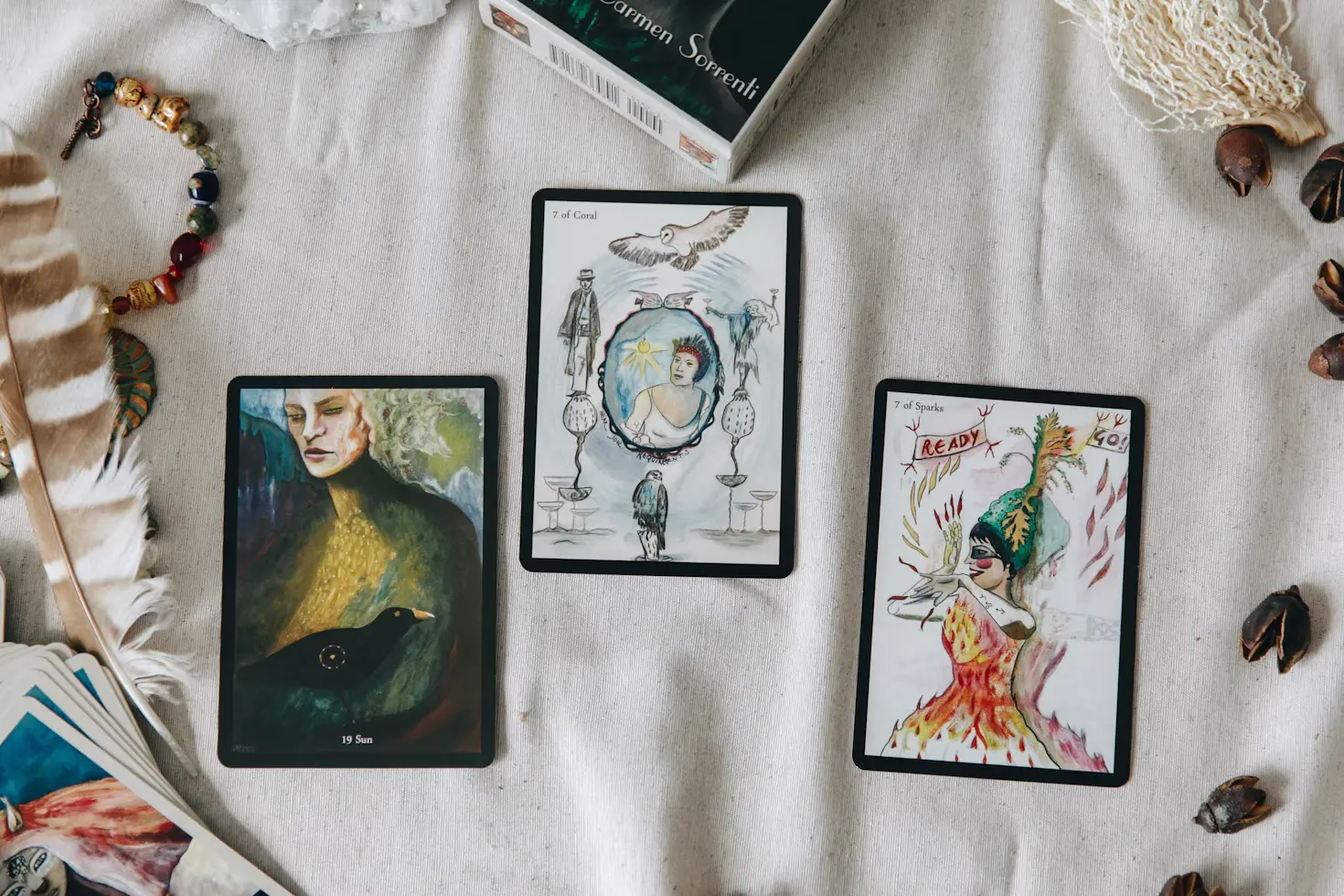
Lenormand Card Reading: A Guide to Divination and Clarity
Lenormand card reading is a structured, practical cartomancy system that uses a 36-card deck featuring everyday symbols (such as the Rider, the House, the Tree, and the Key) to provide clear, direct answers to specific life questions. Unlike open-ended intuitive tools, Lenormand works like a visual language where cards are read in pairs and sentences rather than in isolation. It is ideal for people seeking grounded, actionable clarity on career decisions, relationship dynamics, or immediate personal dilemmas. When approached as a supportive, holistic reflection tool, a Lenormand reading helps cut through mental noise and highlight practical next steps.
Whether you feel overwhelmed by too many choices or want a fresh perspective on a recurring pattern, this structured card system offers a direct, no-nonsense mirror for your current situation.
History and Origins of Lenormand Card Reading
Despite its name, the Lenormand deck was not originally designed for fortune-telling. Its roots trace back to 1799 in Nuremberg, Germany, when a brass manufacturer named Johann Kaspar Hechtel created a parlour board game called Das Spiel der Hoffnung (The Game of Hope). Players rolled dice and moved tokens across a 36-card grid featuring familiar, everyday illustrations, with the goal of reaching card number 35, the Anchor.
After Hechtel died at age 28, his game faded into obscurity until the mid-19th century. Around 1846, a publisher reissued the 36-card deck in Paris under the name Petit Lenormand, linking it to Marie Anne Adelaide Lenormand. Mademoiselle Lenormand was France’s most celebrated cartomancer during the Napoleonic era, famously reading cards for Empress Josephine, Maximilien Robespierre, and Jean-Paul Marat before she died in 1843.
While Marie Lenormand actually used standard playing cards and Etteilla decks during her lifetime, attaching her famous name to Hechtel's 36-card game sparked an instant sensation across Europe. Throughout the 19th and 20th centuries, European readers refined the card combinations into a rigorous, rule-based method of cartomancy that remains popular across Germany, France, the Netherlands, and Australia today.
How Lenormand Card Reading Works: Symbolic and Psychological Perspectives
To get the most out of Lenormand card reading, it helps to understand both its traditional symbolic mechanics and how the human mind processes visual patterns.
The Symbolic Perspective
In traditional Lenormand practice, every card represents a concrete, everyday noun or concept rather than an abstract psychological archetype. You rarely pull a single card on its own. Instead, readers combine two, three, five, or nine cards—or lay out all 36 cards in a master grid called the Grand Tableau—to build literal sentences.

For example, the Clover (luck or a brief opportunity) paired with the Letter (written communication) points to a pleasant message, a contract, or good news arriving soon. The proximity of cards matters too: cards landing close to the central Significator card (representing the client) indicate immediate influences, while cards further away reflect distant factors or passing concerns.
The Psychological and Cognitive Perspective
From a practical, everyday perspective, Lenormand works by giving your thoughts something concrete to look at. When you feel stuck in anxious overthinking, your brain tends to loop through the same familiar narratives over and over. Looking at simple visual symbols helps your mind step outside those usual thought loops and see your situation from a fresh angle.
Psychologists often note that visual prompts make it easier to notice what you actually feel and care about beneath the surface. As renowned Swiss psychiatrist Carl Jung observed regarding symbolic systems,
"People will do anything, no matter how absurd, in order to avoid facing their own souls."
Working with a clear set of everyday images cuts through mental excuses and encourages honest self-reflection.
How Lenormand Differs from Tarot
People often confuse Lenormand with Tarot, yet the two systems function very differently in practice:
-
Deck Size and Structure: A traditional Tarot deck contains 78 cards divided into Major and Minor Arcana. A Petit Lenormand deck contains exactly 36 cards, with no reversed (upside-down) meanings.
-
Literal vs. Archetypal Meaning: Tarot explores deep psychological states, spiritual lessons, and inner archetypes. Lenormand focuses on tangible, day-to-day realities, events, people, and practical outcomes.
-
Card Combinations vs. Individual Depth: A single Tarot card holds layers of rich symbolism that can sustain a 15-minute discussion on its own. A Lenormand card only reveals its full meaning when paired with neighbouring cards, much like combining a noun and a verb to form a clear sentence.
Benefits and Common Concerns It Helps With
As a complementary, holistic reflection practice, Lenormand card reading supports emotional clarity and grounded decision-making. People commonly turn to a session when navigating:
-
Career and business decisions: Weighing up a job offer, assessing workplace dynamics, or clarifying the practical steps needed to launch a new project.
-
Relationship clarity: Understanding communication patterns, identifying external pressures affecting a partnership, or gaining perspective after a breakup.
-
Decision paralysis: Breaking down complex, overwhelming choices into clear, manageable factors when logic alone leaves you second-guessing.
-
Life transitions: Finding steady ground during major shifts such as moving house, changing career direction, or redefining personal priorities.
-
Pattern recognition: Spotting recurring habits or blind spots that keep showing up in your personal or professional life.

What to Expect in a Lenormand Reading Session
If you have never experienced a professional Lenormand reading, knowing how a consultation is structured can help you feel comfortable and prepared.
-
Clarifying Your Question: Lenormand thrives on specific, grounded questions. Your practitioner will start by helping you frame clear inquiries around what you actually want to understand, rather than asking vague, open-ended questions.
-
Shuffling and Card Spreads: Depending on the depth of your session, the reader will shuffle the 36-card deck and lay out a specific spread. Common layouts include a 3-card or 5-card line for targeted questions, a 9-card square (Box Spread) for examining the layers of a specific issue (or the full 36-card Grand Tableau for a comprehensive overview of work, home relationships, and health priorities).
-
Structured Interpretation: The practitioner reads the cards systematically, pointing out how pairs interact, which cards sit close to your Significator card, and what themes repeat across the layout. A skilled reader translates these visual combinations into plain, practical English.
-
Interactive Discussion: You will have space to ask follow-up questions, test how the observations match your real-world experience, and explore practical options moving forward.
-
Session Wrap-Up: Most sessions run between 30 and 60 minutes, either in person or online via video call. Many practitioners encourage you to take notes or record the conversation so you can reflect on the insights afterwards.
Ethical Boundaries and Best Practices
Approaching any divination tool with healthy discernment keeps the experience empowering. A reputable Lenormand reader will never diagnose medical conditions, offer certified financial or legal advice, or claim that your future is set in stone.
Cards highlight current trajectories and surrounding influences, not fixed fate. Your choices, boundaries, and actions always remain firmly in your hands.
Frequently Asked Questions
How much does a Lenormand card reading session cost?
In Australia, a standard 30-to-60-minute Lenormand card reading typically costs between $75 and $160 AUD, depending on the practitioner's experience and whether you choose a focused spread or a full 36-card Grand Tableau. Short 15-to-20-minute introductory sessions at wellness events or online may start around $45 AUD, while extended consultations combining Lenormand with coaching or energy work can cost $180 AUD or more.
How do I find a good, trustworthy Lenormand reader?
Look for practitioners who communicate clearly, avoid fear-based claims, and frame readings as a collaborative tool for personal clarity rather than rigid fortune-telling. Reading verified client reviews and checking a practitioner's ethical approach will help you gauge their style before booking. If you want to skip the guesswork of searching through unverified directories, Bodhi Holistic Hub connects you with vetted holistic practitioners across Australia, making it easy to compare profiles, read genuine reviews, and book a session with confidence.
Is Lenormand more accurate than Tarot?
Neither system is inherently "more accurate," as both depend on the skill of the reader and the clarity of your question. However, many people find Lenormand feels more direct and concrete for practical, everyday questions about work, timing, and tangible events, whereas Tarot excels at exploring emotional nuance and inner personal growth.
Can I get an effective Lenormand reading online?
Yes. Online Lenormand sessions work seamlessly over video call. Because Lenormand relies on clear visual combinations rather than physical touch, practitioners often point a dedicated camera at the card table or share high-resolution images of your spread so you can see every card combination clearly as they explain it.
Do I need to prepare anything before my session?
Yes, coming with one to three specific, open questions makes a big difference. Instead of asking, "What will happen to me this year?" try asking, "What do I need to know about accepting this new role?" or "What is currently influencing communication in my relationship?"
Are there "bad" cards in a Lenormand deck?
Certain cards, such as the Coffin, the Scythe, the Whip, or the Mice, depict challenging themes like endings, sudden cuts, stress, or gradual loss. However, in Lenormand, no card is purely negative on its own. Depending on surrounding cards, the Scythe might simply mean cutting away an unhelpful habit, while the Coffin can signify necessary closure before a fresh start.
References and Further Reading
Professional Organisations
-
Tarot Guild of Australia (TGA): Australia's national non-profit association supporting professional standards, ethics, and education for Tarot, Lenormand, and cartomancy practitioners.
-
Australian Psychics Association (APA): Industry body promoting ethical conduct and consumer protection across intuitive and symbolic reading modalities in Australia.
Research and Scientific Foundation
-
Australian Psychological Society (APS): Educational resources on cognitive reflection, decision-making biases, and structured self-inquiry tools.
-
Journal of Analytical Psychology: Peer-reviewed research exploring Carl Jung's work on symbolism, pattern recognition, and projective reflection in human psychology.
Educational Resources
-
The Complete Lenormand Oracle Handbook by Caitlin Matthews (A thorough, historically grounded manual covering card meanings, combinations, and the Grand Tableau).
-
Lenormand Thirty Six Cards: An Introduction to the Petit Lenormand by Andy Boroveshengra (A classic guide to traditional European combination techniques).
-
Secrets of the Lenormand Oracle by Sylvie Steinbach (A practical, structured workbook for learning sentence-building and card spreads).
Related Modalities
-
Tarot Reading: Uses a 78-card archetypal deck to explore deeper emotional, psychological, and spiritual themes alongside everyday situations.
-
Astrology: Examines planetary cycles and birth charts to offer broader context around timing, personality traits, and life chapters.
-
Holistic Counselling and Life Coaching: Structured, forward-looking support that helps you turn insights from a reading into practical daily habits.
-
Oracle Card Reading: Uses illustrated, theme-based decks to offer gentle daily guidance, emotional reflection, and intuitive inspiration without a fixed rulebook.
Related Articles
-
How to Trust Your Intuition: A Practical Guide to Hearing Your Inner Wisdom
-
My Journey as a Psychic Medium: Understanding the Bridge Between Worlds
-
Psychic Reading: How to Prepare, What to Ask and What to Expect
This guide was written by the Bodhi Holistic Hub team according to their editorial policy.
People will do anything, no matter how absurd, in order to avoid facing their own souls.
Carl Jung
We would love to hear from you