Self Care
Arts Therapy
Arts Therapy: A Complete Guide
What Is Arts Therapy, and Is It Right for You?
There's something that happens when you put a paintbrush in someone's hand and take away the expectation that they need to produce anything beautiful. Often, something honest comes out instead.
Arts therapy is a form of psychotherapy where trained therapists use creative processes — drawing, painting, collage, clay work, and sculpture — as the primary means of helping people explore emotions, process difficult experiences, and improve their mental wellbeing. Unlike an art class, the goal isn't technique or aesthetic output. What you create is a starting point for reflection and conversation, not a finished product to be judged.
Arts therapists are qualified mental health professionals. They hold postgraduate training in both psychology and therapeutic practice, and in Australia they're registered through ANZACATA (the Australian, New Zealand and Asian Creative Arts Therapies Association). This isn't craft as distraction. It's a structured, evidence-informed clinical modality used in hospitals, schools, community mental health settings, and private practice.
Arts therapy suits people of all ages who find it hard to put their inner experience into words. Children who haven't yet developed that language. Adults who have the words but can't quite reach the feeling underneath them. People living with trauma, grief, chronic illness, anxiety, depression, or burnout. Anyone who has sat across from a therapist and felt strangely blocked, even when they genuinely wanted to open up.

A Brief History: Where Arts Therapy Came From
The idea that making things is healing is ancient. Cave paintings, ritual objects, ceremonial masks. Every culture across human history has used some form of creative expression to process fear, grief, meaning, and identity.
Arts therapy as a formal discipline emerged in the mid-twentieth century. In England, artist Adrian Hill coined the term in 1942 after noticing how drawing and painting helped tuberculosis patients in hospital recover more fully. Around the same time in the United States, educator Margaret Naumburg was developing what she called "dynamically oriented art therapy," grounding it in psychoanalytic ideas. She believed spontaneous image-making could bypass the defences people build around difficult emotions, making unconscious material visible and workable in a way that conversation alone often couldn't.
Her contemporary Edith Kramer took a different angle. Rather than treating art as a diagnostic or analytic tool, she emphasised the creative process itself as inherently therapeutic. Making something, completing it, holding it in your hands and recognising it as yours. That process, Kramer argued, builds ego strength, identity, and emotional resilience.
Both perspectives remain central to modern practice. Today's arts therapists draw on psychodynamic, humanistic, cognitive-behavioural, trauma-informed, and somatic approaches, adapting their methods to the needs of whoever is sitting across from them.
In Australia, the profession gained formal occupational classification in 2007 and has grown steadily since. ANZACATA now represents thousands of practitioners across Australia, New Zealand, and the Asia-Pacific region.
How Arts Therapy Works
You don't need artistic skill. That's the first thing most practitioners will tell you, and it genuinely matters. Arts therapy doesn't ask you to be good at making art. It asks you to make something while your therapist pays careful attention to what emerges: what you choose, what you avoid, how you engage with the materials, what you say when you look at what you've made.
The creative process activates parts of the brain that talk-based therapy doesn't always reach. When we're engaged in making something with our hands, the nervous system tends to shift out of the hypervigilance that can make it hard to access emotion directly. It becomes a little safer to feel.
The image you produce becomes what therapists call a "third object." It sits between you and the therapist, and you can both look at it and talk about it from a slight remove. That distance is protective. People often find they can say things about a drawing that they couldn't say directly about themselves, and through that indirect route, something real gets worked through.
Research supports what practitioners observe clinically. A 2025 systematic review published in the Australian & New Zealand Journal of Psychiatry, led by researchers at UNSW Sydney, found arts therapy to be an effective and acceptable treatment for young people with acute mental health conditions, with the strongest evidence base around PTSD, depression, and suicidal ideation. A 2024 Australian study from the Sydney Children's Hospitals Network found that offering arts therapy on an inpatient psychiatric ward was associated with a meaningful reduction in restrictive practices such as physical restraint and seclusion. These aren't fringe findings. They're institutional research, published in peer-reviewed journals.
For adults, a 2025 review in BMC Psychiatry found that arts therapy supports emotional processing, reduces isolation, builds a sense of agency, and can facilitate what researchers describe as post-traumatic growth. And a broad review in Cureus confirmed beneficial effects across a range of mental health conditions, including improvements in self-awareness, emotional regulation, and communication.

What Arts Therapy Can Help With
Arts therapy is used to support a wide range of experiences such as:
- Trauma and PTSD. Visual and creative expression offers a way to approach traumatic memory indirectly, which can be less destabilising than direct verbal narration, particularly in the early stages of trauma processing.
- Anxiety and depression. The act of creating can interrupt ruminative thought patterns, and completing something, however small, creates a genuine sense of accomplishment and agency.
- Grief and loss. When grief is too large for language, making something in its presence, rather than trying to describe it, can allow it to be witnessed.
- Burnout and life transitions. Arts therapy helps people reconnect with a sense of self that can get buried under exhaustion or the disorientation of major change.
- Chronic illness and palliative care. Creating something meaningful when the body feels like it's working against you can be quietly powerful.
- Children and adolescents. For young people who don't yet have sophisticated emotional language, or who resist talking-based approaches, arts therapy provides a natural alternative.
- Neurodivergent individuals. Many autistic people, and those with ADHD, find the multimodal, non-verbal engagement of arts therapy more accessible than conversation-centred therapy.
What to Expect in a Session
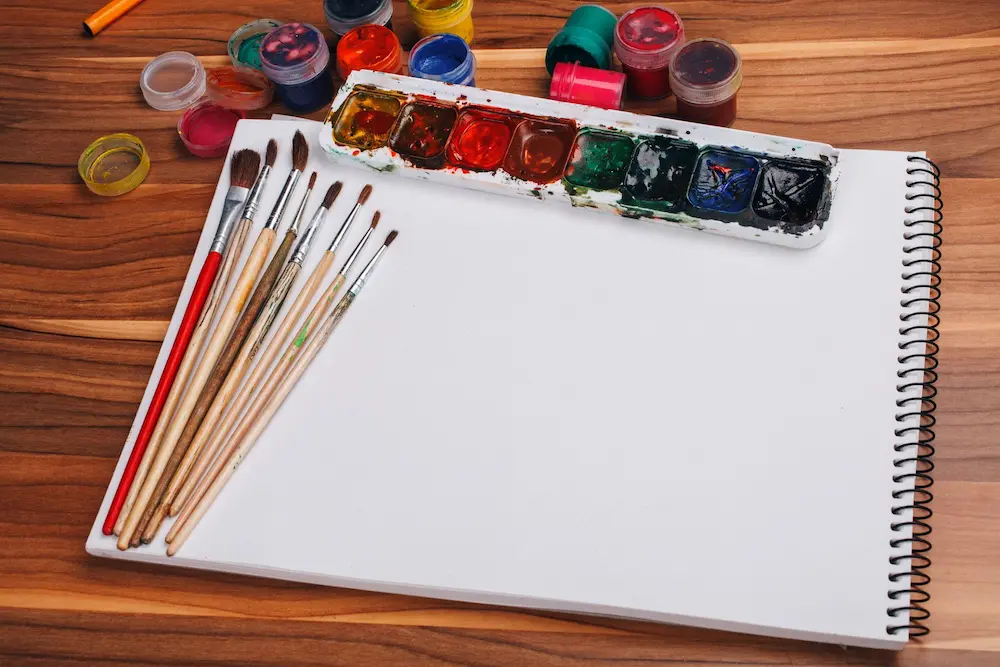
A typical arts therapy session lasts between 50 and 60 minutes. You might work individually with a therapist, or in a group setting. The environment is deliberately designed to feel safe and low-pressure, with a range of materials available: paints, pastels, pencils, clay, collage materials, textiles.
Your therapist might offer a loose prompt or theme to work from, or simply invite you to begin. There's rarely a requirement to explain what you're making while you're making it. Afterwards, you'll usually have time to talk about what came up for you during the process, what the image means to you, what you noticed. You won't be asked to interpret your work as if it's a diagnostic puzzle. The meaning that matters is yours.
If the idea of making art feels confronting or embarrassing, that's worth mentioning. A good arts therapist will meet you where you are, and many people find that once they're in the room with materials in front of them, the self-consciousness dissolves more quickly than they expected.
Some people feel emotional during sessions. That's common, and it's one reason why the therapist's training and presence matters. You're not just doing a creative activity. You're doing therapy.
Arts Therapy Across the Lifespan
One of the things that makes arts therapy genuinely versatile is how well it adapts across age groups and life stages.
With young children, therapists might use puppets, sand trays, or simple drawing to externalise feelings that the child can't name yet. With teenagers, arts therapy can create a sense of autonomy and non-judgment that's hard to replicate in more directive therapeutic formats. With older adults, it offers creative engagement, a sense of purpose, and a gentle way to process the accumulated weight of long lives, including dementia-related identity work.
For people in palliative care, creating something that will outlast you is a form of legacy-making. Hospice arts therapy programmes around the world report that this kind of creative work supports not just the person who is dying, but the family members who will carry something tangible forward.

Frequently Asked Questions
Do I need to be artistic or creative to benefit from arts therapy?
No. Arts therapy isn't about talent or skill. Most people who find it most helpful describe themselves as not creative at all. The materials are simply a way in.
How is arts therapy different from an art class or art workshop?
An art class focuses on learning techniques and producing work. Arts therapy focuses on the process of making and what that process reveals or facilitates emotionally. The therapist is a trained clinician, not an art teacher, and the goals are therapeutic rather than educational.
Is arts therapy evidence-based?
Yes. There's a growing body of peer-reviewed research supporting its effectiveness, particularly for trauma, PTSD, anxiety, depression, and emotional regulation. The evidence base continues to grow, especially in Australian and British clinical settings.
Can arts therapy be used alongside other treatments?
Yes, and it often is. Arts therapy works well alongside conventional psychotherapy, psychiatric care, occupational therapy, and many of the complementary modalities listed on Bodhi Holistic Hub. It's integrative by nature.
How many sessions will I need?
This varies considerably. Some people work with an arts therapist for a short, focused period of six to twelve weeks. Others engage in longer-term work. Your therapist will discuss goals and likely duration with you early in the process.
Is arts therapy suitable for children?
It's one of the most well-supported modalities for children and adolescents, particularly those experiencing anxiety, trauma, behavioural difficulties, or challenges with emotional expression.
How do I find a qualified arts therapist?
You can browse Bodhi Holistic Hub's curated directory of verified practitioners, where profiles include qualifications, specialisations, and client reviews, so you can make an informed choice before reaching out.
References and Further Reading
Professional Organisations
- Australian, New Zealand and Asian Creative Arts Therapies Association (ANZACATA)
- Allied Health Professions Australia (AHPA): ANZACATA profile
- American Art Therapy Association (AATA)
Research and Scientific Foundation
- Versitano et al. (2024). "Art therapy is associated with a reduction in restrictive practices on an inpatient child and adolescent mental health unit." Journal of Mental Health.
- UNSW Sydney Newsroom (2024). "Lost for words? Research shows art therapy brings benefits for mental health."
- Systematic Review (2025). "Art therapy with children and adolescents experiencing acute or severe mental health conditions." Australian & New Zealand Journal of Psychiatry / PubMed.
- Martin (2022). "Role of Art Therapy in the Promotion of Mental Health: A Critical Review." Cureus / PMC.
Related Modalities
- Holistic Counselling offers a whole-person approach to emotional wellbeing that shares arts therapy's emphasis on integrating mind, body, and lived experience rather than treating symptoms in isolation.
- Somatic Coaching works with the body's stored responses to stress and trauma and pairs well with the sensory, hands-on nature of arts therapy.
- EMDR (Eye Movement Desensitisation and Reprocessing) is another evidence-based modality used for trauma processing that can complement arts therapy particularly when working with difficult memories that resist verbal description.
- Mindfulness supports the gentle, present-moment attention that arts therapy encourages, making it a natural companion practice for people exploring creative therapeutic work.
This guide was written by the Bodhi Holistic Hub team according to their editorial policy.
Last Updated : June 2026
Art is a means of widening the scope of human experience by creating a world of manageable reality.
Edith Kramer, Art as Therapy, 2000
Discover our vetted practitioners

Cathy Williams
View Profile