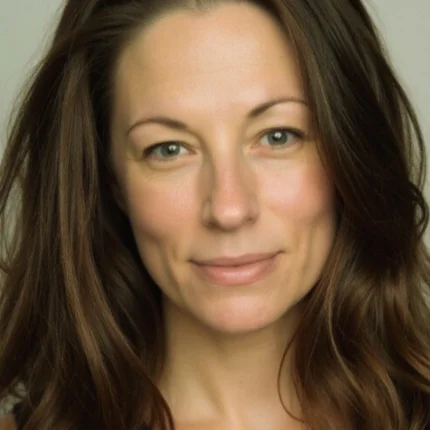
Written by Kathryn Sforcina
A look at why menopause carries more than physical symptoms, why symptom-focused approaches often miss what's happening underneath, and how this stage can become a doorway into intuition, ancestral healing, and wisdom.
Menopause Through the Eyes of a Ñusta Paqo (Shaman)
The more women I work with through perimenopause and menopause, the more I find myself returning to the same question.
What if some of what we have come to call symptoms are also signals?
This does not make the physical symptoms any less real. The sleeplessness, heat, changing weight, brain fog, exhaustion, aching joints, vaginal dryness, anxiety, rage, and grief can alter the entire landscape of a woman's life. Hormonal changes are real, and the support women receive through medicine, hormone therapy, nutrition, naturopathy, movement, sleep care, and nervous system regulation can make an enormous difference.
Still, I have rarely met a woman whose experience of menopause could be explained by hormones alone.
I have watched old grief rise with an intensity that feels completely out of proportion to what is happening in the present. Relationships a woman has endured for years suddenly become unbearable. The roles she has inhabited begin to feel too small. Her dreams become more vivid. Her sensitivity increases. Her tolerance for dishonesty, including her own, starts to disappear.
Her body begins refusing compromises she has spent a lifetime making.
For some women, this feels like they are falling apart. Yet the longer I sit beside women in this transition, the less convinced I am that falling apart is always what is happening.
Something is ending, certainly. But something else is also coming forward.
This is why I do not see menopause simply as the ending of the reproductive years. I see it as an initiation into our wisdom years.
What Is Actually Happening in the Body and Energy Field During the Crone Years?
More Than a Hormonal Transition
There is a very real danger in spiritualising physical symptoms.
A woman who is suffering needs to be listened to, properly assessed, and given access to appropriate care. She should not be told that her hot flushes are unprocessed anger, that her pain is caused by negative thinking, or that she could heal herself if she were more spiritually evolved.
Those ideas do not restore a woman's power. They place the responsibility for her suffering back upon her.
At the same time, there is another danger in treating the body as though it exists separately from the life the woman has lived.
A woman does not arrive at menopause as a collection of hormones. She arrives with a nervous system, a history, relationships, memories, responsibilities, losses, and ways of surviving that may have been formed decades before her first perimenopausal symptom appeared.
She may find relief from her hot flushes and still feel profoundly disconnected from herself. Her sleep may improve while grief continues moving through her body. Her medical results may offer reassurance, while every part of her being knows that the life she has been living no longer fits.
Menopause often arrives alongside other thresholds. Children leave home. Parents age. Relationships change or end. Careers that once gave a woman identity no longer hold the same meaning. The body begins ageing in ways she can no longer deny. Time itself can start to feel different.
The energy once poured into reproduction, raising children, building a career, maintaining relationships, or holding everyone else together begins to return to her.
Many women do not know what to do with that energy when it arrives. They have spent so much of their lives asking what other people need that they no longer know how to recognise the sound of their own longing.

Reclaiming the Crone
The word crone has been stripped of much of its original dignity.
It has come to describe the ageing woman who is no longer considered desirable, useful, or relevant — the woman whose beauty has faded and whose place at the centre of life has been taken from her.
This distortion tells us far more about the culture that created it than it does about the crone herself.
The crone is the woman who has lived long enough to recognise the difference between what is real and what is performance. She has seen promises broken, identities lost and rebuilt, love found in unexpected places, and grief survive what once felt unsurvivable.
She is not powerful because she controls others. Her power comes from no longer being so easily controlled by the need for approval, belonging, or permission.
Yet a woman does not become a crone because she reaches a particular birthday or because her menstrual cycle ends. The crone is formed through what she is willing to meet.
She is formed through the grief a woman has postponed, the anger she has swallowed, and the truths she has known but not spoken. She is shaped through the relationships a woman has outgrown, the identities she created to survive, and the parts of herself she abandoned because there was never enough time or safety to know them.
Menopause brings much of this material closer to the surface.
I do not believe it rises to punish us. I believe it rises because the woman we are becoming can no longer carry it in the same way.
Why Don't Symptom-Focused Approaches Fully Address What's Shifting?
There is no one correct way to move through menopause.
Some women experience profound relief through menopause hormone therapy. Others need non-hormonal medication, nutritional intervention, psychotherapy, pelvic health care, or treatment for other conditions occurring alongside menopause. Many women draw support from several of these approaches at once.
My work does not sit in opposition to any of them.
What I have noticed, though, is that symptom management and meaning-making are different forms of care.Medicine may help a woman understand what is happening hormonally. Therapy may help her understand the story she carries. Coaching may help her make decisions and create change.
Yet she can understand her story intellectually and still feel it living within her body. She can know she is safe now while her nervous system continues to respond as though danger is near. She can recognise a family pattern and still find herself repeating it. She can take the supplements, follow the protocols, and make every recommended lifestyle change, while continuing to feel that something remains unresolved beneath the surface.
That does not mean she has failed, or that the treatments have failed. It may mean the whole woman has not yet been included in the healing process.
What Has Not Been Healed May Become Louder
As a Ñusta Paqo (initiated shaman) and trauma-informed somatic practitioner, I have spent years observing how unresolved experiences continue to live through the body, nervous system, relationships, and energy of the people I work with.
Our experience of menopause does not occur separately from the life we have lived.
Research has found an association between adverse childhood experiences and greater menopausal symptom burden. Studies have also identified relationships between post-traumatic stress symptoms and experiences including disrupted sleep, hot flushes, night sweats, vaginal dryness, and painful intercourse.
This does not mean menopause symptoms are caused by trauma. It does not mean a woman can think, meditate, or spiritually practise her way out of a biological transition.
It means that enormous hormonal change is happening inside a woman whose nervous system has already learned how to survive everything that came before it.
A woman may be moving through biological change while also living inside a body shaped by what she has endured, suppressed, or never had the support to process. Her heart and soul may still be carrying experiences that once felt far too heavy to meet.
Both realities can exist at the same time.
This may help us understand why two women with similar hormonal profiles can have very different experiences of menopause. It may also offer another place to look when a woman has tried many physical approaches and still feels that relief remains beyond her reach.
Her body may not be betraying her. It may be revealing the places where she has carried too much for too long.
Our survival strategies deserve respect before we try to change them. The woman who learned to disconnect from her body, remain agreeable, work relentlessly, or care for everyone except herself did not do so because she was weak. She adapted.
At one point, that adaptation may have protected her family, her relationships, her livelihood, or her ability to continue functioning. Yet what allowed her to survive one season of her life may begin creating suffering in another.
Menopause often exposes that difference.

What Does It Mean to Heal Ancestral Wounds During This Stage?
What Are Ancestral Wounds?
When I speak about ancestral wounds, I am not referring only to something invisible or mystical. Ancestral patterns are carried through stories, beliefs, loyalties, silences, and the ways families learn to survive.
A daughter may learn that women must endure. A mother may teach self-sacrifice because self-sacrifice was once essential to keeping the family together. A family may carry unspoken trauma following war, poverty, violence, the death of a child, addiction, institutionalisation, displacement, or the loss of land and belonging.
These experiences influence parenting, attachment, communication, and nervous system responses. They shape how later generations understand safety, love, power, conflict, money, and worth.
Research into intergenerational trauma is also exploring biological and epigenetic pathways, although claims about the direct transmission of trauma through human DNA across multiple generations remain complex and debated. Family environment, culture, behaviour, attachment, and social conditions are already powerful ways patterns continue.
We do not need to prove that every ancestral wound has been written into our genes before we acknowledge the influence of what happened before us.
Sometimes we can see it in the women whose lives came before our own. The women who were unable to speak their needs or own their truth. The women who stayed because leaving was impossible. The women who lost children and were given no place to grieve. The women whose intuition was dismissed or pathologised. The women whose painful cycles disrupted their lives while they were told to stop making such a fuss.
We can see it in the women who knew more than they were permitted to say.
During menopause, a woman may begin to recognise that much of what she carries did not begin with her. That recognition can be liberating — but recognition alone rarely creates lasting release.
Ancestral healing asks us to notice where the pattern still lives. It may appear in our relationships, the choices we keep making, the emotions we cannot express, or our difficulty receiving, resting, speaking, and belonging.
The pattern is not released because we understand it. It begins to loosen when we create a different relationship with it.
How Does Intuition Awaken During This Transition?
The Awakening of Intuition
Many women tell me that their intuition becomes stronger during the menopausal years. They describe vivid dreams, a clearer gut response, or an increasing sensitivity to people and places. They may feel drawn towards solitude or nature. They may know, with a certainty they cannot logically explain, that something in their life must change.
I do not see intuition as a gift reserved for unusually spiritual people. Intuition is embodied information, and we all have access to it.
It can be the tightening in the body before the mind understands why something feels unsafe. It can be the sense of expansion that comes when a decision is aligned. It may arrive through a dream that keeps returning, or through the inner voice that has been speaking beneath the demands and expectations of daily life.
A woman's awareness may have been directed outward for decades. She has been watching for who needs her, what must be done, and how she can keep everything functioning. During menopause, some of that attention begins returning to her.
The questions she asks begin to change. She may start wondering what she knows, what she has silenced, and what she is still carrying that was never hers. She may question why healing has remained out of reach, or recognise the places where she continues abandoning herself.
Her intuition may not have suddenly appeared. It may simply have become too strong to override.
Who Tends to Feel This Shift Most Strongly?
The emotional and spiritual dimensions of menopause can arise for any woman, but I often see them most intensely in women who have spent much of their lives caring for others.
They may be mothers, practitioners, leaders, partners, daughters, or the person everyone turns towards when something goes wrong. They are often highly capable women who survived difficult chapters of their lives by continuing to function.
Some have unresolved trauma or family patterns that feel louder than they once did. Others live with physical symptoms that have not fully resolved despite receiving appropriate medical or holistic care. Many have felt unseen or unheard for years.
They may find themselves drawn towards somatic, ancestral, or spiritual work for the first time, without having any language or framework for what they are experiencing. They are not necessarily trying to become more spiritual — they are trying to become more honest about what they feel, what they know, and what they can no longer continue carrying.
These women are making intentional steps to meet the "her" they have never had the chance to meet within themselves before. And not just to meet her — they truly wish to befriend her, and the new way of being she represents for them.

What Actually Happens in a Session with Kathryn?
Why I Created a Community for This Passage
One of the things I have noticed most deeply is how alone women can feel within this transition.
A woman may be surrounded by people who love her and still have nowhere she can bring the whole truth of what is happening. She may have a doctor helping her manage her hormones and a therapist supporting her emotional health, yet still have no place to speak about the woman she feels herself becoming. There may be no language for the grief, anger, changing relationships, emerging boundaries, or questions that cannot be answered through another treatment plan.
This is why I created Wiser & Wilder: Awakening the Power of the Crone — a monthly, live, online community for women moving through perimenopause and menopause.
I did not create it to add another list of things exhausted women should be doing to improve themselves. There are already enough places telling women how to eat, sleep, exercise, perform, and age more successfully. I created it because women need somewhere they can be human inside this transition.
We need places where the physical symptoms are taken seriously without becoming the only part of the conversation. We need space for the grief that has never been expressed, the anger carrying information about where we have been silenced, and the exhaustion of being the person who has held everyone else together.
We also need somewhere to explore the intuition becoming louder, the dreams that feel significant, and the wildness that may have been buried beneath responsibility, expectation, and survival.
The power of the crone is not power over other people. It is the power that returns when a woman no longer needs to betray herself in order to belong.
It can be found in her discernment, her relationship with her body, and her willingness to recognise when something has ended. It appears as she learns what is hers to carry, what needs to be released, and what has been waiting for her attention.
This community gives women a place to explore these parts of themselves in the company of others standing at the same threshold. There is something powerful about hearing another woman give language to an experience you thought belonged only to you. It can be the moment you recognise that you are not failing, and that you are not disappearing.
You are moving through a passage our culture has given us very little preparation, ritual, or meaningful language for. For much of human history, life transitions were witnessed. Wisdom was shared. Women learned from those who had walked before them, and thresholds were marked within community. Many of us no longer have access to those structures.
It is part of my response to what has been lost — a living community where women can be witnessed through this passage, learn to listen more deeply to themselves, and begin making meaning from what is changing.
You do not need to consider yourself spiritual, or arrive with an understanding of ancestral healing, somatic practices, or shamanic work. You only need to sense that this stage of your life may be asking something more of you than simply finding a way to tolerate the symptoms.
It meets live online each month, and is open to any woman moving through perimenopause or menopause.
When Individual Work Is Needed
Community offers something individual work cannot, and individual work offers something a group cannot. Within the community, women can learn, share, listen, and recognise themselves through the experiences of others. Private sessions create space to follow the specific pattern, wound, or symptom belonging to one woman's life.
My individual work begins by seeing the whole woman. Before attempting to shift anything, I explore where the issue is appearing physically, emotionally, mentally, energetically, ancestrally, and spiritually.
A symptom may be connected with a present situation, but it may also weave through an earlier experience, a nervous system survival response, a family pattern, or a part of the self that was pushed aside when it was not safe to feel, speak, or choose.
A session may include nervous system regulation, somatic awareness, energy tracking, shamanic healing processes, ancestral work, breath, sound, or guided practices. The process is shaped by what is actually present and what the woman has the capacity to meet. This is not about forcing a breakthrough or exposing every wound at once — the pace of the work must honour what the body and nervous system are ready to integrate.
Where it is useful, I offer practices to continue at home, or suggest sections from my book, Bringing the Lost Parts of Me Home, to support what has opened. I also reach out within seven to ten days so we can notice what has shifted and what may still require care.
Some women experience an immediate release. For others, the change reveals itself over time. They notice themselves responding differently, setting a boundary without the same guilt, or recognising an emotion that belongs to an earlier chapter of their life. They begin trusting themselves again.
How Is This Different from Therapy or Coaching Alone?
Therapy, coaching, and shamanic or energetic work serve different purposes.
Therapy can offer essential support for understanding trauma, emotions, relationships, behaviour, and mental health. Coaching can help a woman clarify goals, make decisions, and take purposeful action. Both of these modalities work at the mental layer of our being.
My work can sit beside these forms of support, yet it goes many layers deeper — working with the body, heart, mind, energy field, and soul map of an individual, as well as how their field relates to their life map and the broader energetic ecosystem of the collective.
I include the body, nervous system, energetic experience, ancestral context, and more, rather than working only through conversation or cognitive understanding.
There can be a great distance between knowing why a pattern exists and experiencing that pattern as having less power over the choices we make — or a trigger disappearing entirely because the soul wound at its core was healed.
This work is complementary. It does not replace appropriate medical, psychological, or psychiatric care.
How Long Does This Kind of Shift Take?
A single session can open something significant. It may create clarity, release pressure, or reveal a pattern a woman has never been able to see clearly before.
Patterns held for decades do not always disappear in one encounter. I am less interested in creating an instant transformation than I am in supporting change a woman's body and nervous system can actually sustain.
Sometimes that change is immediate and unmistakable. At other times, it appears through the way she meets an experience that once overwhelmed her. She may rest without carrying the same guilt, recognise that an emotion belongs to an earlier time, or say no where she would once have abandoned herself.
Progress cannot always be measured through a checklist. It is often revealed through a woman's changing relationship with her body, her symptoms, her history, and her own inner knowing.

Becoming the Wise Woman
Menopause does not automatically make us wise. It does, however, place us in contact with the material from which wisdom can be made.
It brings us face to face with what we have lived, what we have inherited, and what we have tolerated. It shows us the patterns that once protected us, and asks whether they still belong in the life we are creating now.
For the woman who has tried to manage every physical symptom yet still feels something deeper moving beneath the surface, the next step may not be another attempt to silence what her body is saying. It may be learning how to listen differently.
I often describe myself as a bridge between worlds. My work moves between the physical and the spiritual, modern understanding and ancestral ways of knowing, and the story a woman can explain and the pattern her body continues to carry.
That does not mean every symptom has a hidden spiritual meaning, or that every challenge is ancestral. Sometimes the body needs medicine, nourishment, investigation, rest, or specialised care. Sometimes there is also a woman beneath the symptoms waiting to be met.
Not the woman she used to be. The woman she is becoming.
She should not have to become her alone.
This is the deeper purpose of Wiser & Wilder: Awakening the Power of the Crone — a monthly, live, online community where women in perimenopause and menopause can bring the whole truth of this transition. It is a place to explore the symptoms that can be named on a medical chart alongside the grief, anger, changing relationships, and emerging wisdom that are more difficult to measure. It is a place to remember that your body is not your enemy, and that the parts of you becoming louder may not need to be silenced.
Menopause is an ending. But it may also be the threshold through which you reclaim your voice, your knowing, and the woman you are now ready to become.
Membership is $29 per month. You can join the community here, or book a free discovery call to learn how we can work together one-on-one.
Frequently Asked Questions
Why does menopause feel like more than a hormonal shift for some women?
Menopause takes place within the context of a woman's whole life. Hormonal changes may coincide with changing relationships, unresolved grief, nervous system stress, ageing parents, children leaving home, and questions of identity or meaning. These layers can make the transition feel emotional, relational, and spiritual as well as physical.
What are "ancestral wounds," and how do they relate to menopause?
Ancestral wounds are patterns connected with the experiences, beliefs, roles, and survival responses carried within a family or culture. They may continue through learned behaviour, attachment, silence, expectations, and social conditions. Research is also examining possible biological and epigenetic pathways, although this remains an evolving area.
How is energy work different from hormone or symptom management?
Symptom management focuses on treating or reducing physical and psychological symptoms. Shamanic Energy Medicine explores the woman's experience of where a pattern may be held, and can include the body, nervous system, emotions, imagery, ritual, and spiritual meaning. It is intended to complement appropriate medical and psychological care.
What does it mean to "awaken intuition" during this life stage?
Awakening intuition means becoming more aware of the information communicated through the body, emotions, dreams, instincts, and subtle responses. It can look like recognising what feels safe, aligned, complete, or no longer true before the conscious mind has fully explained why.
Is this approach suitable if I'm not spiritual, or new to this kind of work?
Yes. You do not need to hold any particular spiritual beliefs or have previous experience with somatic, ancestral, or shamanic work. You can begin with what you are noticing in your body, relationships, emotions, and daily life.
What happens in an individual session with Kathryn?
Each session is shaped around the woman and what is present for her. It may include discussion, nervous system support, somatic awareness, energy tracking, shamanic practices, ancestral exploration, breath, sound, or guided integration.
How many sessions are typically needed?
There is no fixed number. Meaningful, lasting change in deeply entrenched patterns often unfolds over a series of sessions, and many women find that 8–12 sessions allows enough continuity for deeper shifts to stabilise. The pace is always guided by what arises and what the woman has the capacity to integrate.
Can this be combined with conventional menopause treatment or therapy?
Yes. Many women use hormone replacement therapy, medical support, counselling, or psychotherapy alongside this kind of reflective and community-based exploration. In fact, the combination is often what allows both the body and the inner life to be supported at the same time.
Who is this approach best suited for?
It is best suited to women in perimenopause and menopause who sense that their experience is not only physical, but also emotional, psychological, and deeply life-shifting. It is for those who feel that something in them is asking to be met more honestly — whether that shows up as exhaustion, anxiety, irritability, grief, a loss of identity, or a growing refusal to keep living in ways that no longer feel true. It is especially supportive for women who are curious about the deeper meaning of this transition, and who want space to explore what is being revealed beneath the symptoms rather than only trying to manage or suppress them.
Is this work a replacement for medical menopause care or therapy?
No. This work is designed to sit alongside appropriate medical, psychological, and holistic support. It does not replace diagnosis, treatment, therapy, or advice from qualified healthcare professionals.
About the Author
Kathryn Sforcina
Kat Sforcina is a published author, ceremonialist, and initiated shaman (Ñusta Paqo) across multiple Indigenous lineages, with over 28 years of experience guiding individuals and leaders through deep healing and rites of passage. Recently voted Judge's Pick – Best Spiritual Practitioner in the Bodhi Holistic Practitioner Awards, she brings a rare fusion of ancient intelligence and modern insight, transmuting her own lived experience of burnout, trauma, and grief into the medicine that defines her work.
See Profile
Subscribe to our newsletter to receive a regular dose of holistic news, tips and tools (we only send one every month or so we promise!)


