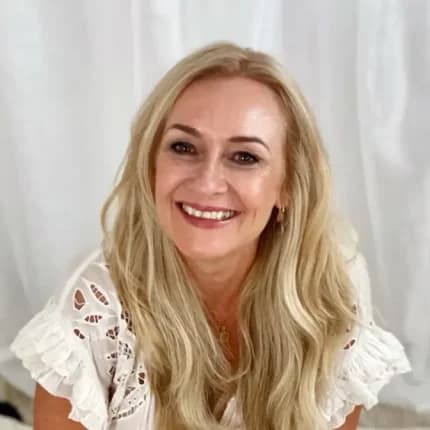
Written by Natasha Harrison
Neuro-Transformational Therapy & Self-Directed Healing Practitioner
A cancer diagnosis changes everything. In a single conversation, the world you knew rearranges itself. The questions you used to ask about tomorrow are replaced by questions you never thought you would have to ask at all. The fear is real. The confusion is real. The exhaustion, the grief, the sudden and unwelcome intimacy with your own mortality — all of it is real. A stage 4 Non-Hodgkin Lymphoma diagnosis does something quietly devastating that goes beyond the physical. It splinters your sense of self. The person you were — her routines, her certainties, the quiet assumptions she made about tomorrow — begins to dissolve. You find yourself standing in the rubble of a life you recognised, holding pieces that no longer fit together the way they once did. It is not just illness. It is an unravelling. And it asks more of you than you ever thought you had to give.
There was something I had always felt — a deeper current beneath the physical, a knowing that the body's distress was never only about the body. Something I sensed long before I had the words for it. The diagnosis did not introduce me to that truth. It simply made it urgent.
A World I Did Not Know
Before my diagnosis, I had never been seriously ill. I had spent my adult life working with natural therapies, healthy living, and self-exploration — understanding the body as an intelligent, self-healing system. I had never needed hospitals or pharmaceutical drugs. Then I was sitting in a clinic being told I had stage 4 Non-Hodgkin Lymphoma. The path forward involved chemotherapy. I was terrified — not just of the illness, but of the treatment. Of surrendering my body to a system I had spent years moving consciously away from. There was real grief in that collision. And then came the frustration. Because what I found inside the medical system — as grateful as I am for the care that saved my life — was an absence of wholeness. The oncology team treated the cancer. But no one treated me. No one asked about my emotional world, my nervous system, the sense of self dissolving alongside the disease. I was being addressed in fragments — organ by organ, scan by scan — with no integration of the emotional, energetic, or spiritual dimensions of what I was living through. Healing the whole person must be integrated. The mind and body are not separate. What we feel lives in our physiology — and a health model that addresses one while ignoring the other is, at best, incomplete. Healing the body without tending to the inner world is only half the work. I found this deeply frustrating. I still do. The medical system is not yet built for the whole person. So I made a commitment to support my own inner wellbeing alongside everything else. I chose to receive the medical treatment. And I chose, alongside it, to go deeper into every inner practice I had ever known.
Witnessing, Not Suppressing
One of the most transformative shifts in my healing was moving from managing my feelings to witnessing them. There is a profound difference. Managing looks like staying strong, pushing through, telling yourself to be grateful and not afraid. On the surface it looks like resilience. Internally, it is suppression — and suppression keeps the nervous system locked in chronic stress. Witnessing is something else. It means sitting with a feeling — fear, grief, rage, resentment, helplessness — and saying: I see you. You are allowed to be here. It means letting the wave move through rather than holding it back. It means releasing the resistance to what is, and allowing yourself to feel it fully without judgment. Through Inner Child Emotional Release and SDH Release, I learned to visit the places inside myself holding old pain — not just the pain of diagnosis, but a lifetime of unexpressed grief, resentment, and outdated beliefs about who I was. What I found there was not darkness. It was information. It was my body, finally being heard.
Healing required me to become both the patient and the practitioner of my own inner world.
Releasing What No Longer Serves
Limiting beliefs are the stories we carry, usually from childhood, that tell us we are not enough, not safe, not worthy of care. They live in the subconscious — beneath logic, beneath willpower — quietly shaping our experience of the world and of our own bodies. For me, healing made these beliefs impossible to ignore. When you are confronting something of this magnitude, every untrue story you have ever told yourself becomes urgent. Why am I still holding this? Why have I spent years believing I had to earn rest? Why does receiving care feel so uncomfortable? Why do I find it easier to support others through crisis than to allow anyone to support me? These are not incidental questions. They are the questions that, left unanswered, keep the nervous system in a state of low-grade vigilance — always braced, never fully safe, never fully at rest. And a nervous system that cannot rest cannot heal at its fullest capacity. Subconscious reprogramming — working directly at the level of the deeper mind and the body's stored memory — became central to my healing. When the subconscious mind begins to release old patterns, the nervous system can move out of chronic fight-or-flight. The body, no longer spending its resources on carrying unresolved emotional weight, can redirect that energy toward repair and regeneration.
Nervous System Regulation as Daily Medicine
Emotional regulation is ongoing. It is a daily practice — a way of relating to yourself that must be cultivated with the same consistency and commitment as any physical treatment. For me, this meant making Yoga Nidra, chakra balancing, energy healing, and yoga therapy as non-negotiable as showing up to my medical appointments. Yoga Nidra — the practice of yogic sleep — became a sanctuary I returned to again and again. In the state of deep rest between waking and sleeping, the nervous system has a rare opportunity to fully discharge accumulated stress. It is in this liminal space that the subconscious becomes most receptive to new patterns, new beliefs, new possibilities. Night after night, I lay in the dark and allowed my body and mind to reset — not forcing, not fixing, just allowing. These were not indulgences. They were medicine. The science is increasingly clear: a regulated nervous system supports immune function, reduces inflammatory markers, and creates the internal conditions in which the body's own healing intelligence can operate most effectively. Rest is not passive. It is profoundly active.
Learning to truly rest — to feel safe enough in my own body to let down my guard — was one of the harder things I had to learn.
The Deconstruction — and the Becoming
And then, three months after achieving a complete metabolic response — all disease gone, the scans clear — a new and more aggressive illness arrived, as if the quiet were simply an intermission. Before I had fully exhaled, it demanded more. A new treatment was offered, one that felt even further from anything I had ever known. It was here that the real work began. Not the physical work. The inner work. The kind that no protocol can touch. Serious illness doesn't just threaten the body. It quietly dismantles everything you thought you knew about yourself. The certainties. The sense of self. The story of who you were. For a long time, losing that felt like grief. And it was. But somewhere in the surrendering, I began to understand that this unravelling was not an ending. It was an opening. Underneath the old armour and the old stories, something quieter and more true began to emerge. I am still becoming her. Old patterns still surface. I still get triggered. But the difference now is the softness I meet myself with when they do — a pause instead of a push, curiosity instead of judgment, compassion instead of criticism.
There is no going back. And I have come to hold that with something close to gratitude. The woman who walked into that clinic is not the woman writing these words. I would not trade her for anything.
I have come home to my body and my soul. The peace I feel now — quiet, still unfolding — is the truest healing I have ever known.
What Healing Actually Looks Like
It looks messy. It looks like crying in the middle of a breathing exercise because something finally lets go. It looks like sitting with your fear long enough to let it speak. It looks like becoming curious about your pain instead of pushing it away. It looks like slowly rebuilding trust with your own body. Learning to listen to it again. Learning that it was never against you — it was always asking to be heard." My healing was not linear. There were days the practices felt hollow and the fear felt overwhelming. But every time I returned — to the breath, to the stillness, to myself — it mattered. Small, consistent, cumulative. Resilience is not the absence of breaking. It is the capacity to break, and to begin again. With a little more tenderness each time. If you are on this road, know this: your inner world matters as much as your treatment plan. What you feel is not weakness. It is your body and soul asking to be heard.
Listen to yourself. You have always known the way.
About the Author
Natasha Harrison
Natasha Harrison is a Neuro-Transformational Therapy and Self-Directed Healing Practitioner dedicated to supporting clients in achieving holistic wellbeing through subconscious reprogramming and nervous system regulation. She specialises in helping individuals release limiting beliefs, process unresolved emotional patterns, and restore inner balance using an integrative approach. Her practice is deeply informed by her personal healing journey following her recovery from stage 4 cancer, through which she consistently applied these techniques to support her physical, emotional, and mental wellbeing.
See Profile
Subscribe to our newsletter to receive a regular dose of holistic news, tips and tools (we only send one every month or so we promise!)


