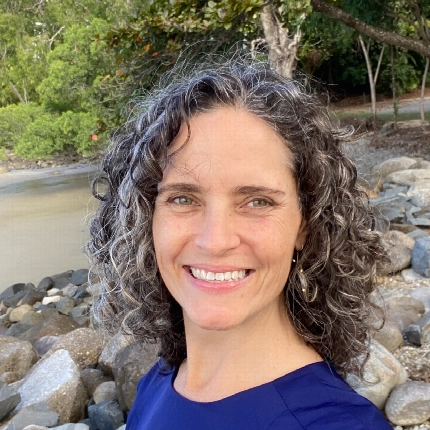
Written by Pamela McDowell
An Access Consciousness® certified facilitator explains how Access Bars works on the energetic roots of stress and anxiety — and why it reaches what other approaches often miss.
What Happens During an Access Bars Session?
If you've had your own experience of Access Bars changing something, you might have been surprised by what did change. You might have also been surprised by how it changed.
When you receive an Access Bars session, you lay back and relax while a practitioner gently touches spots on your head. There is no need for stories, no figuring things out. Simply relax and let things change.
Two of my favourite stories are about ladies who received their first Bars sessions with no particular outcome in mind. One of the ladies said that after her session, she encountered her adult daughter while shopping. Normally the interaction would have led to an argument. In this case it was calm and free of any upset. The other lady was visiting her daughter in Perth when she received a session. Afterward, driving around Perth was no longer a stressful event to avoid. She did it with ease.
The Science Behind Access Bars, Stress and Anxiety
Since Access Bars was introduced by Gary Douglas in the 1990s, Bars practitioners and facilitators around the world have noticed remarkable changes in people in multiple areas of their lives. People knew it worked, there just wasn’t a scientific explanation for the Bars or what was happening in the body. Some of those practitioners and facilitators became curious and started studying Access Bars from a scientific perspective. One of those was Dr. Terrie Hope, who released the first peer-reviewed study on Access Bars.
Dr. Hope has conducted studies on the effects of Access Bars on stress, anxiety and depression. In her published studies, Dr. Terrie Hope demonstrated physiological, neurological and psychological improvements with Access Bars.
In one study, 89% of people showed change in brain waves, going from highly stressed states to more generative states after a 90-minute Bars session. Participants showed high activation at 1 hz delta, which is also found in sleep and allows for relaxation and regeneration of the body during a Bars session. (When people are stressed, they tend not to get the deep sleep they require that allows toxin removal from the brain and regeneration of the body. Muscles require deep sleep to grow. ) The study participants also had an increase in brainwave coherence, which allows for greater connectivity between the regions of the brain leading to more optimal functioning and focus, concentration, memory and creativity.

Dr. Hope’s study also used self-reported subjective measurements of stress and anxiety. Participants reported substantial improvements in their symptoms of stress and anxiety from the sessions. This was using patients who had been previously treated with standard approaches for one or more of stress, anxiety, depression, and post-traumatic stress disorder and continued to have mild to severe symptoms.
In short, the study showed Access Bars helps people transition from a stressed state into a relaxed, generative state. This is done without drugs, with no skill required by the recipient, and no need to cognitively process past trauma to do so. The relaxed, generative state is beneficial to the brain, the body, and the lived experience of the recipient.
Other studies have produced complementary results. Dr. Astrid Vester investigated participants receiving 60-minute Bars sessions comparing that to participants resting for 60-minutes. The study measured breath rate, pulse, blood pressure, heart rate variability, and the self-reported subjective experience. The study showed distinctively improved measures in all areas with Access Bars. What that is showing is that the physiological improvements with Access Bars are more than the equivalent time spent resting.
https://barsinbusiness.com/access-bars-science-research/
Releasing Stored Emotional Charge and Trauma
In my practice I have found Access Bars works really well for people who have also done some cognitive-based work, either on their own or with a psychologist. The Bars allows the energy of stresses and traumas to dissipate from the client’s body.
One client spoke about some of her trauma during a Bars session with me and cried much of the session. It had started as a quiet session, however part-way through I noticed the energy wasn’t flowing as well and I asked her some questions which opened a space where she could talk about the past situations. After the session, she explained she had been to psychologists and had some relief, however during the Bars session with me she was able to actually have a sense of freedom from the stress she had been carrying for years.

Access Bars works brilliantly by itself to let go of stress and anxiety and help return the body to a more generative state - as demonstrated by the studies mentioned previously. Many people even fall asleep during the Bars. Another way to use it is to have the client talk about their situation while receiving Access Bars. Gary Douglas often recommends to people who are stuck in a story to have someone run their Bars while they tell the story. Because of the energetic and physiological changes during the Bars, it allows the story to dissipate instead of intensifying, which is what happens when it is repeated time and time again in normal conversation.
In-Person Bars and Online Verbal Facilitation
I also work with clients online and in-person using verbal and energetic facilitation to help people change, either unwinding old situations or embracing new possibilities. Those sessions can create amazing changes and are something I really enjoy as a facilitator. Even though the facilitation sessions are also energetic, the Bars helps people integrate those changes more easily and I will often recommend them as part of an in-person session. For online clients, I encourage them to also receive Bars sessions from practitioners in their area whenever practical.
Are you tired of managing your stress and anxiety and ready to try something that works at a different level? It is simple to start with a single session, lying down, nothing to do or perform — just receive. It is a chance to experience what genuine energetic relief feels like — not a promise that everything will shift at once, but a real opportunity to find out what becomes possible when the charge behind the stress begins to clear.

FAQ
1. Can Access Bars therapy help with anxiety?
- Yes, and there are studies showing it can be quite effective
2. What is Access Bars and how does it work?
- Access Bars are 32 points on your head that when gently touched stimulate a positive neurological response in the brain, creating a state of deep relaxation for the recipient. This process activates the body’s natural ability to relax and recover, leading to enhanced well-being, reduced stress, and increased motivation.
3. How is Access Bars different from meditation or mindfulness for stress?
- Access Bars requires no skill or effort by the recipient. Simply relax and receive change.
4. What does an Access Bars session feel like?
- Some people feel nothing other than relaxation, others may notice a small sensation in the vicinity of the Bars points.
5. How many Access Bars sessions do I need for stress and anxiety?
- It really depends on the individual. I typically recommend people start with 4-5 sessions to get a sense of what Access Bars can change. Ongoing sessions are an excellent self-care strategy.
6. Is Access Bars suitable for neurodivergent people with anxiety?
- Access Bars are excellent for neurodivergent people.
7. Can Access Bars help with sleep problems caused by stress?
- Many people report improved sleep with Access Bars.
8. Is Access Bars safe to use alongside anxiety medication or therapy?
- Yes.
9. What should I expect after my first Access Bars session?
- You may be quite relaxed after a Bars session. Your body also may desire extra water, sugar, or salt and it can be helpful if you have some available for after the session.
To book in a discovery call or for one of Mel Blundell’s PSYCH-K Sessions or Child Reading/Healings, visit her profile.
This article is written by one of our trusted practitioners on Bodhi Holistic Hub. All practitioners are carefully vetted, and our content follows our Editorial Policy.
About the Author
Pamela McDowell
Pamela McDowell is an Access Consciousness® Certified Facilitator. I offer Access Bars® sessions, Access Energetic Facelift®, Symphony Sessions™, and other treatments and workshops from Access Consciousness that contribute to greater relaxation, less stress, and empowering you to live a more dynamic and enjoyable life.
See Profile
Subscribe to our newsletter to receive a regular dose of holistic news, tips and tools (we only send one every month or so we promise!)


